
Automated Layout vs. Manual Layout (Tape, String, and Chalk Line)
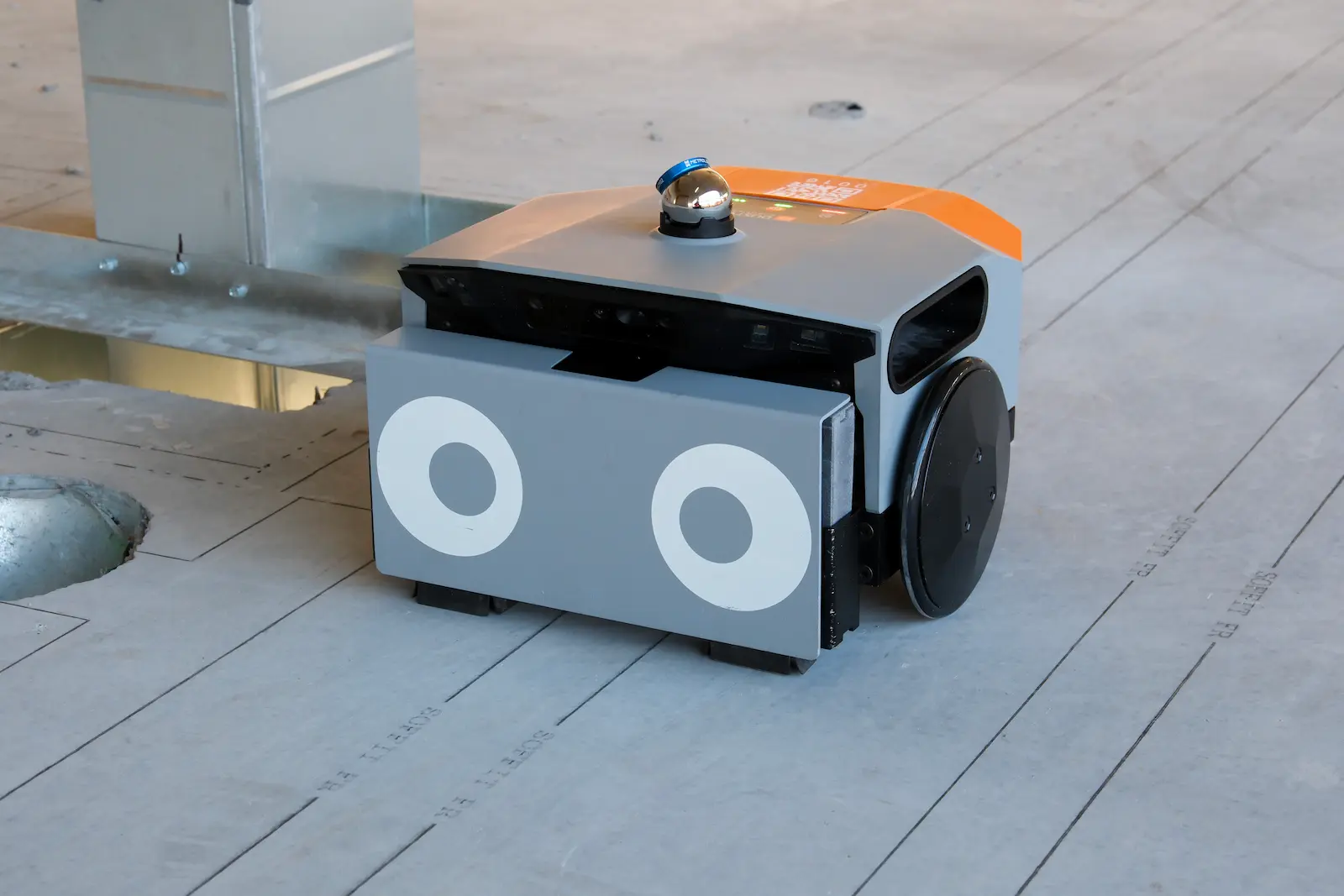
Manual layout re-interprets the drawings in the field with tape and chalk, one trade at a time. Automated layout prints the full coordinated model on the slab in one pass for every trade. The robot replaces the slow, error-prone re-marking step, so the field builds from the model and starts faster.
How is manual layout done today?
A layout crew works from the drawings, pulls measurements with tape and string, and snaps chalk lines on the slab. Each trade does its own layout on its own schedule. It's skilled work, but it's slow and gets repeated for every trade. Every pass also reintroduces the chance of a measurement or interpretation error.
Traditional manual layout: a worker snaps a chalk line by hand next to an existing printed reference line.
How is automated layout different?
Automated layout (also called robotic layout) prints the coordinated model directly on the slab. One file holds every trade's layout, and the robot prints all of it in a single pass at full scale, including text and control. The field reads the lines off the floor instead of re-deriving them from drawings.
A Dusty FieldPrinter prints the layout directly on a finished slab.
Automated vs. manual layout, side by side
| Manual layout | Automated layout | |
|---|---|---|
| Method | Tape and chalk from drawings | Robot prints the model on the slab |
| Trades per pass | One at a time | All trades in one coordinated pass |
| What the field sees | Chalk lines, hand marks | Printed lines and text |
| Speed | Days per trade | The full layout in a fraction of the time |
| Error source | Re-measuring and re-interpreting | Prints what the model says |
| Skilled-labor use | Days spent measuring | Freed for higher-value work |
Is automated layout more accurate than manual?
Automated layout prints at 1/16-inch accuracy and verifies measured control against the model before printing. Because it prints the model rather than re-deriving it by hand, it removes the repeated interpretation step where manual layout tends to drift.
.webp)
Checking a printed line against the source model with a tape measure.
Does automated layout replace the layout crew?
No. Manual layout is skilled work, and the people who do it are the ones who run and check automated layout. The robot takes the repetitive measuring off their plate so that experienced layout people spend their time on the work that needs judgment.
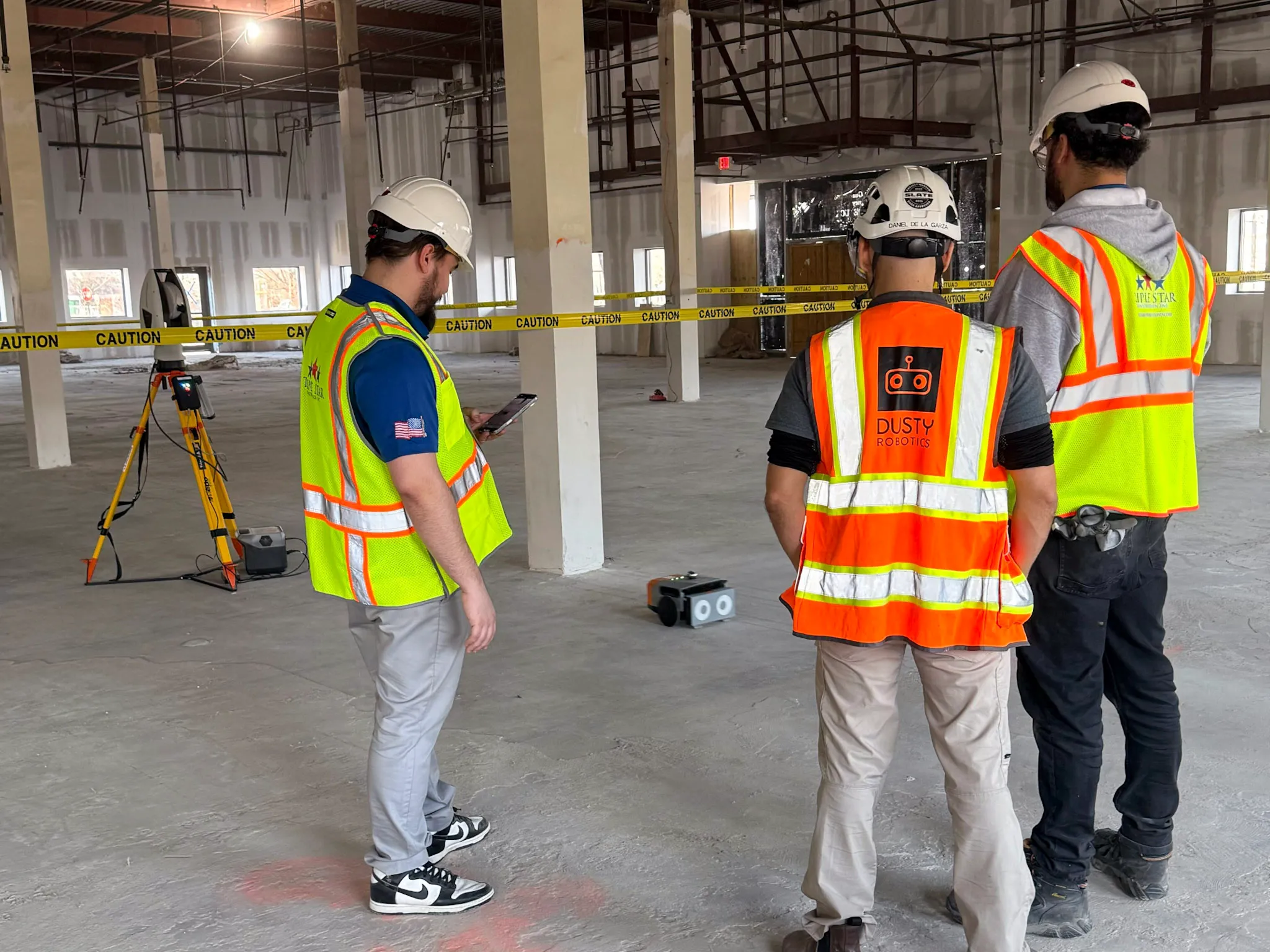
The layout crew runs and checks the robot, working alongside it on the deck.
What this looks like on a real project
"Collaboration with all trade partners (mechanical, electrical, plumbing, framing and drywall) on layout strategy and responsibilities simultaneously, done via the use of Dusty Robotics, delivered the project nearly three months ahead of schedule at a cost savings of approximately $3 million for the client."
— Superintendent, Skanska
Key facts
- Manual layout is sequential and re-interprets drawings by hand; automated layout prints the coordinated model for all trades in one pass.
- The FieldPrinter prints at 1/16-inch accuracy and checks control against the model before printing.
- Automated layout brings total layout time from weeks to days and reduces rework from cross-trade conflicts.
- It frees skilled layout people from repetitive measuring rather than replacing them.
See how GCs run automated layout
Frequently asked questions: automated layout vs. manual layout
Is automated layout more accurate than manual layout?
Yes. It prints at 1/16-inch accuracy and verifies control against the model, removing the re-measuring step where manual layout drifts.
Does automated layout replace the layout crew?
Not entirely. At least one person still runs and checks the robot; for other people on your team, it removes the repetitive measuring so they focus on higher-value work.
When is it worth switching from manual layout?
Most on schedule-driven, multi-trade, or repetitive work, where manual layout sits on the critical path or where rework from conflicts is costly.
Is automated layout worth it on small or single-trade projects?
Manual layout can still make sense on small, single-trade work, but with Flexible Control from Dusty Robotics, any size jobsite can work with Automated Layout. The gain grows with project size and trade count, especially under schedule pressure.
What is a chalk robot?
A chalk robot is an informal name for a construction layout robot, a machine that marks building layout directly on the slab in place of a crew snapping chalk lines by hand. Dusty Robotics' FieldPrinter is one, though it prints in ink rather than chalk, and it marks penetrations and text that a snapped chalk line cannot carry. The FieldPrinter holds 1/16-inch accuracy and checks measured control against the model before it prints. Layout robot and automated layout are the industry terms for the same category.