Repetition without drift

Multi-Family Residential Projects

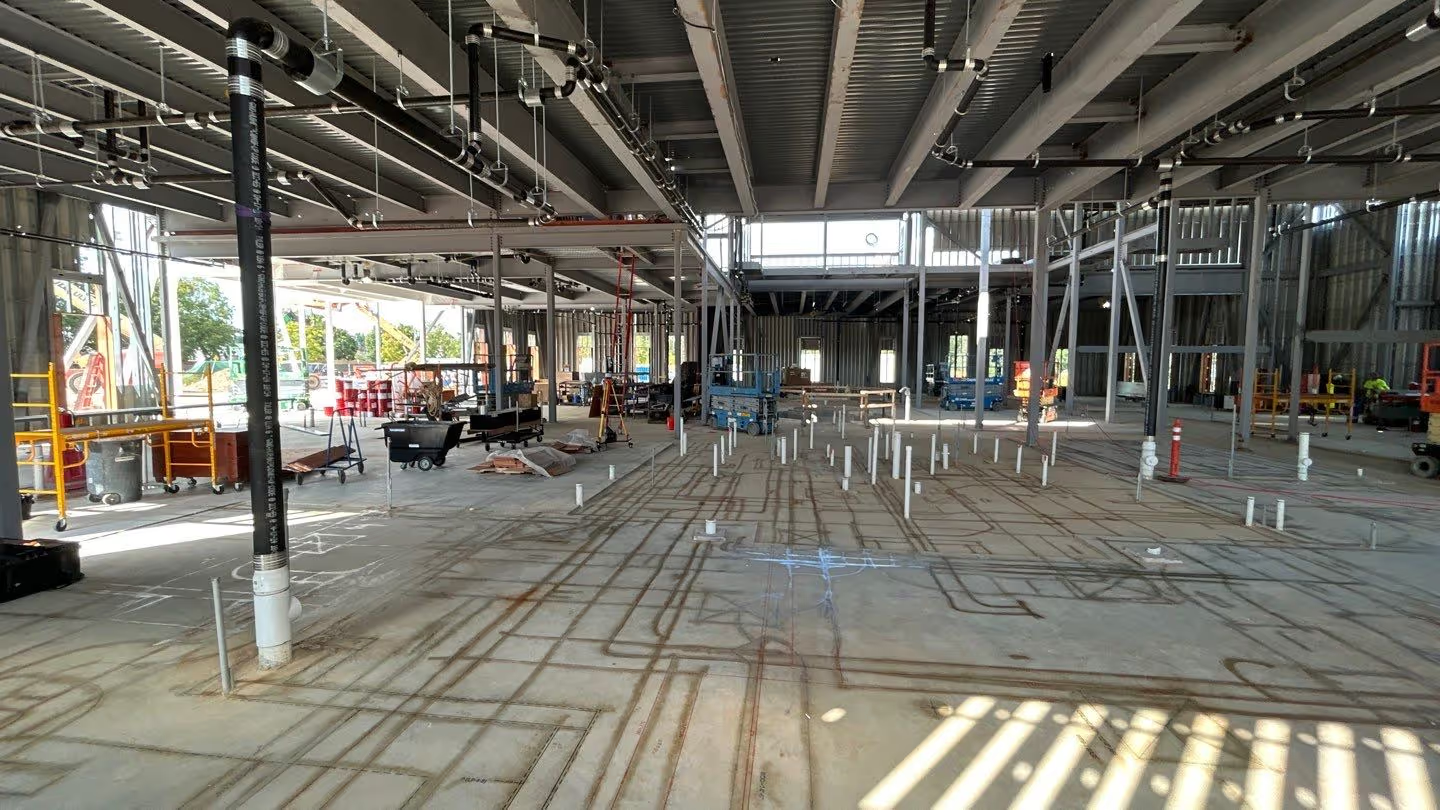
Multi-family construction is all about scale. The same unit, built dozens or even hundreds of times. Every mistake compounds across the building. With Dusty Robotics, teams print the design directly on the deck at full scale, so the build matches the model on every unit and every floor, from wood-frame walk-up to high-rise tower.
Contact us
Quality at scale

Don't let one error become a hundred

Multi-family projects multiply small layout errors. A misplaced bedroom wall in unit one becomes a misplaced kitchen next door. Manual layout drifts unit by unit until punch and rework eat margin and schedule. Print the design on the deck so unit one and unit 100 both match the model.
  • Catch coordination conflicts before they get built into dozens of units.
  • Handover units without construction mistakes, and avoid the warranty calls.
  • Use Dusty Flexible Control to fit interior unit layouts to existing framing and as-built conditions.

See Dusty on multi-family construction.

Get a quote
Speed to revenue

Schedule savings are loan savings

Multi-family economics turn on how fast units reach occupancy. Every week of construction is another week of carrying costs against zero revenue. Pull layout off the critical path so framing starts sooner and follow-on trades don't sit waiting on chalk lines.
  • Lay out a whole floor in hours, not shifts.
  • Print framing, electrical, plumbing, mechanical, and door tags in one coordinated pass.
  • Drive predictable building-to-building schedule pacing across phased developments.
  • Hit your Certificate of Occupancy and pre-leasing milestones on the dates you committed to the lender.
Customer story

Daley's Drywall saved $300K in direct labor and compressed layout schedules by 80%

"When you're laying out walls in repetition, human error is adding up. Dusty removes that error." — J.R. Roy, BIM Coordinator, Daley's Drywall
$300K
Saved in direct labor over two years
80%
Layout schedule compression vs. hand layout
100%
Of jobs use Dusty automated layout
Labor leverage

Get more from the crew you can hire

Qualified layout hands are hard to find and harder to scale across multiple buildings. Automated layout puts one operator with a robot in place of a full layout crew, and an apprentice can run the system as effectively as a 20-year journeyman. Cover more building with the crew you already have.
  • Staff fewer senior layout hands per building and redeploy them where judgment matters.
  • Free framing foremen from chalk-line work and put them on coordination and quality control.
  • Cut the bending and kneeling out of layout work to keep experienced framers in the trade longer.

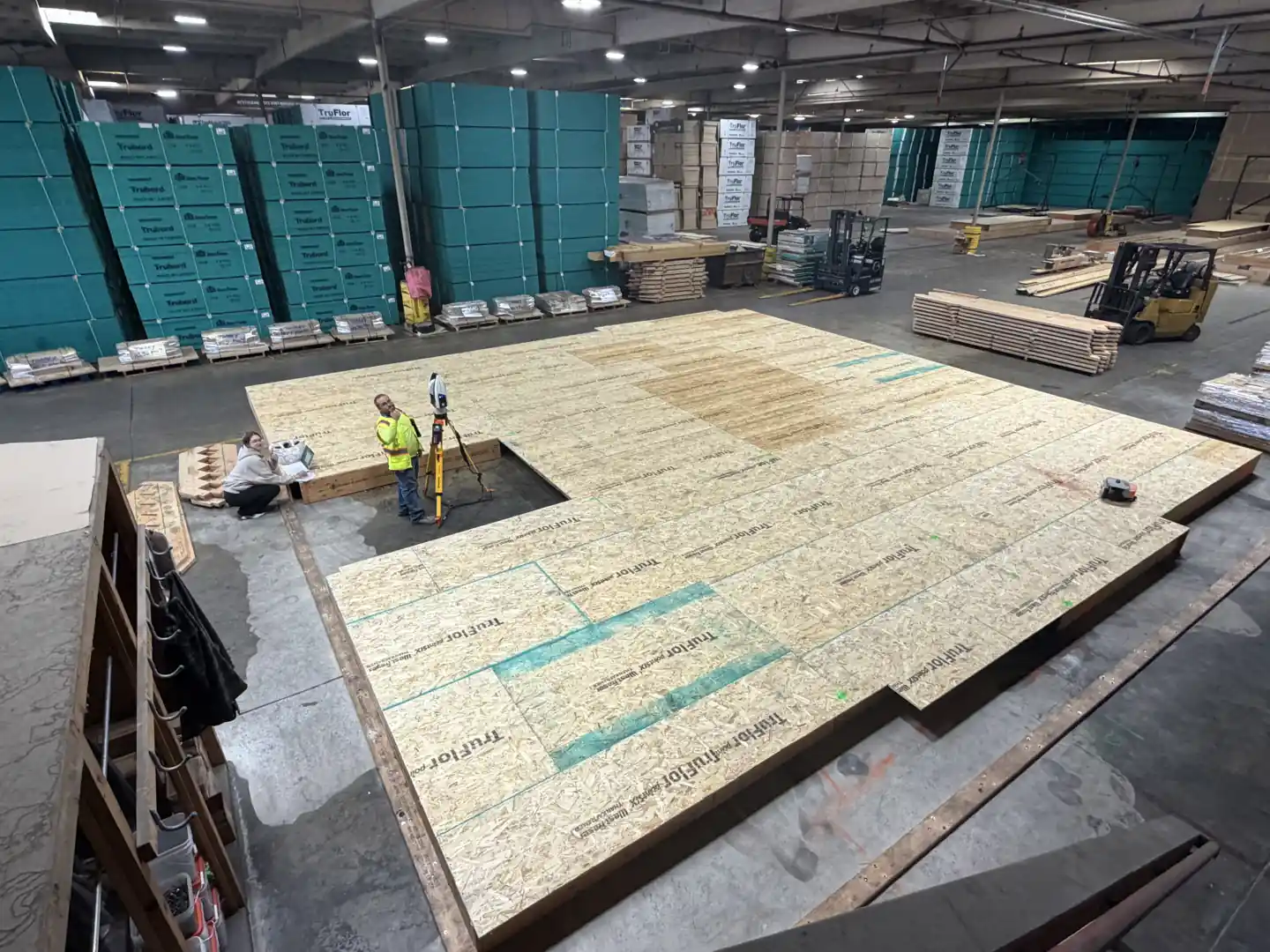
"It used to take us 12-16 hours to manually lay out the plans [...] for just the framing layout. Using Dusty, it takes 6-8 labor hours and we lay out every trade at once. With Dusty we can do double the work, more accurately than traditional layout."
Josh Lewis
COO, FrameTec
Prefab and modular

Build off site, install on site

Multi-family is adopting prefabricated wall panels, floor cassettes, and bathroom pods to compress schedules and offset labor scarcity. Prefab pays off only when the field can install what the shop built. That requires coordination months earlier than traditional construction, with the same 1/16-inch accuracy on the slab or in the shop.
  • Lay out wall panels, floor cassettes, and modular assemblies at the prefab shop with the same 1/16-inch accuracy you'd get on the slab.
  • Print panel numbers, orientation marks, and install instructions on the slab so the field installs more efficiently.
  • Use Dusty’s Floor Elevation to fabricate panels to fit slab irregularities perfectly.
Modular wall cassette being laid out off site with Dusty at a fabrication shop

"We laid them out [modular MEP panels] with Dusty, built them at their site, they completed all the rough-in, and then we brought them on site. They fit perfectly."

Arturo Richardson
Senior PM, Level 5
Automated Layout for Multi-Family Residential Construction

Frequently asked questions

What is a total station?

A total station is an electronic instrument that is used in construction for measuring distances and angles for surveying and construction layout. There are two types of total stations in construction: a total station and a robotic total station. However, total stations are considered outdated tools for construction layout. Fully-automated robotic layout is the better solution that completely automates the layout process by printing the digital model directly on the construction site surface.

What is automated construction layout for multi-family residential projects?

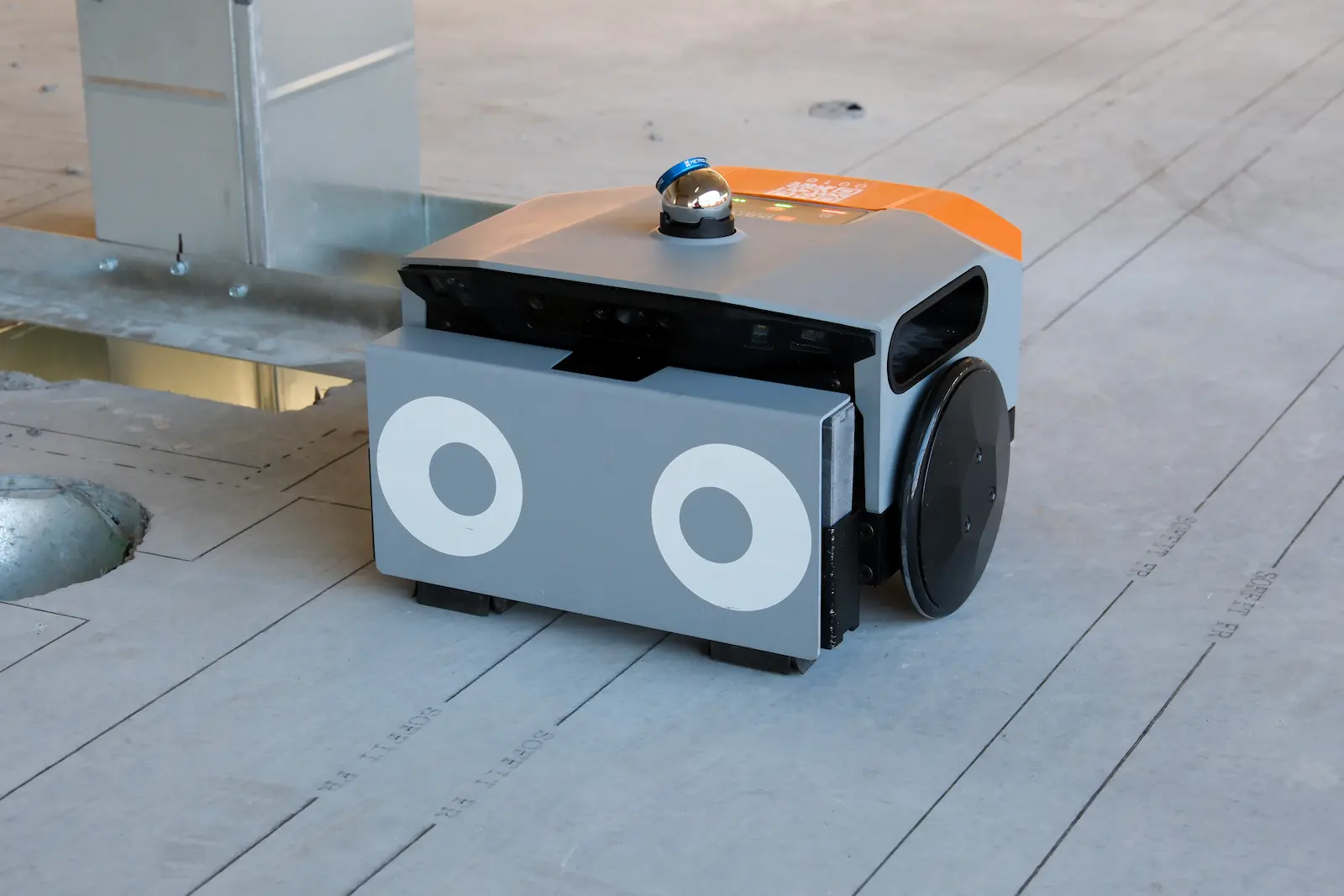
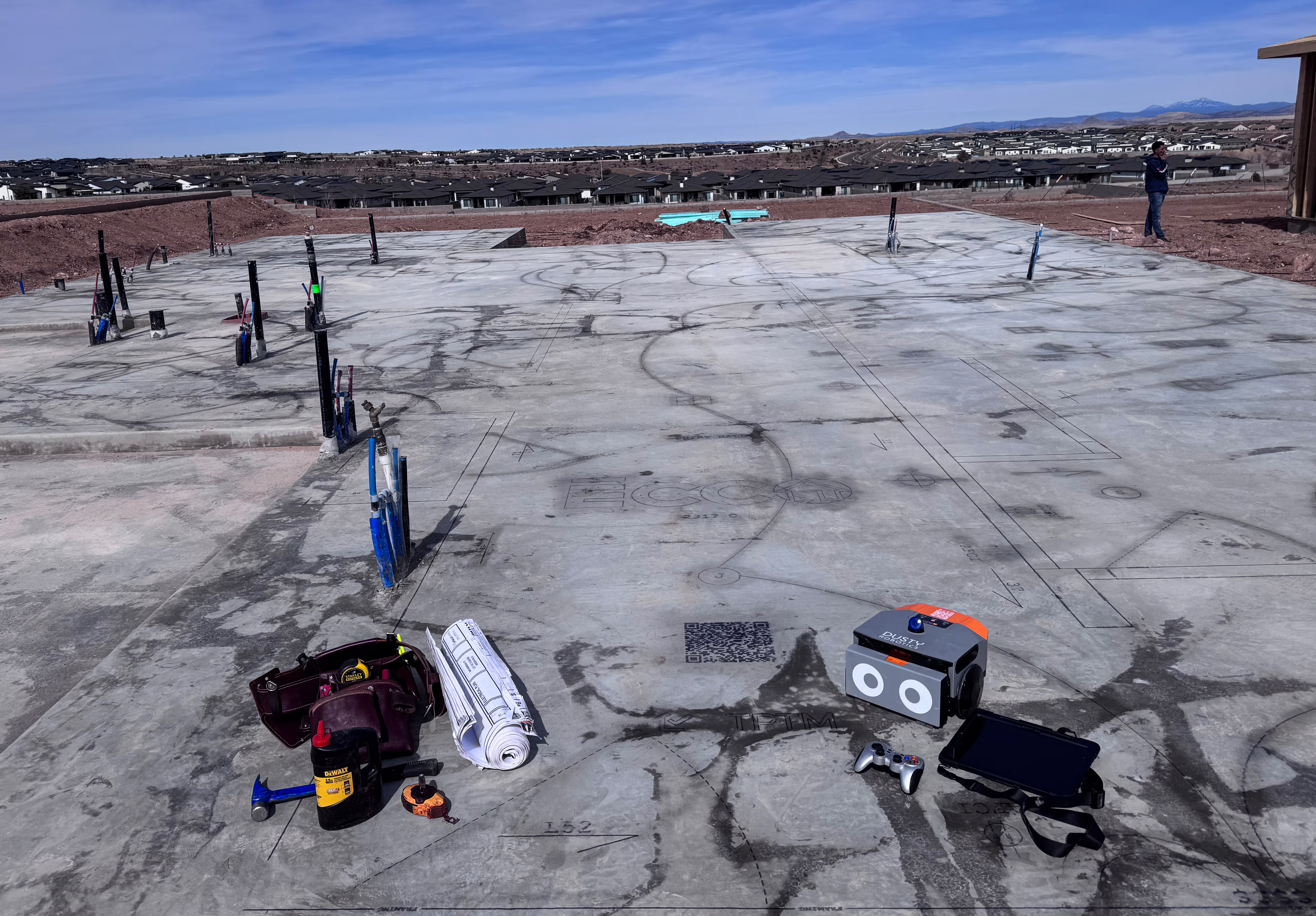
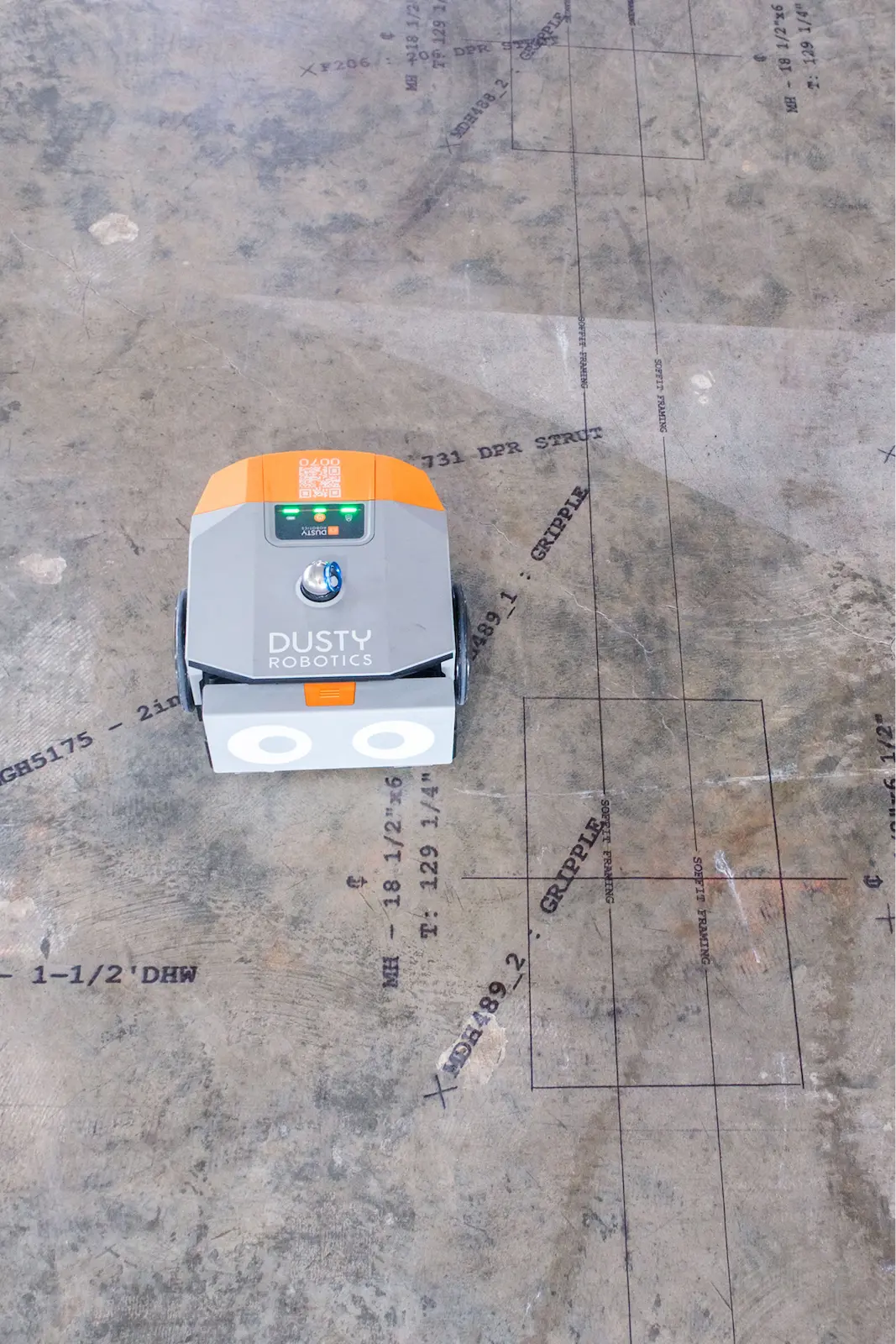
Automated construction layout uses a mobile robot to print the BIM model directly on the slab or deck at full scale, at 1/16-inch accuracy. On multi-family projects, the robot prints wall locations, MEP rough-in points, door tags, and finish locations across every unit and every floor, driven from the design model. The result is a printed plan on the deck that every trade builds from, with the same accuracy on unit one and unit 100.

How does Dusty Robotics work for apartment construction layout?

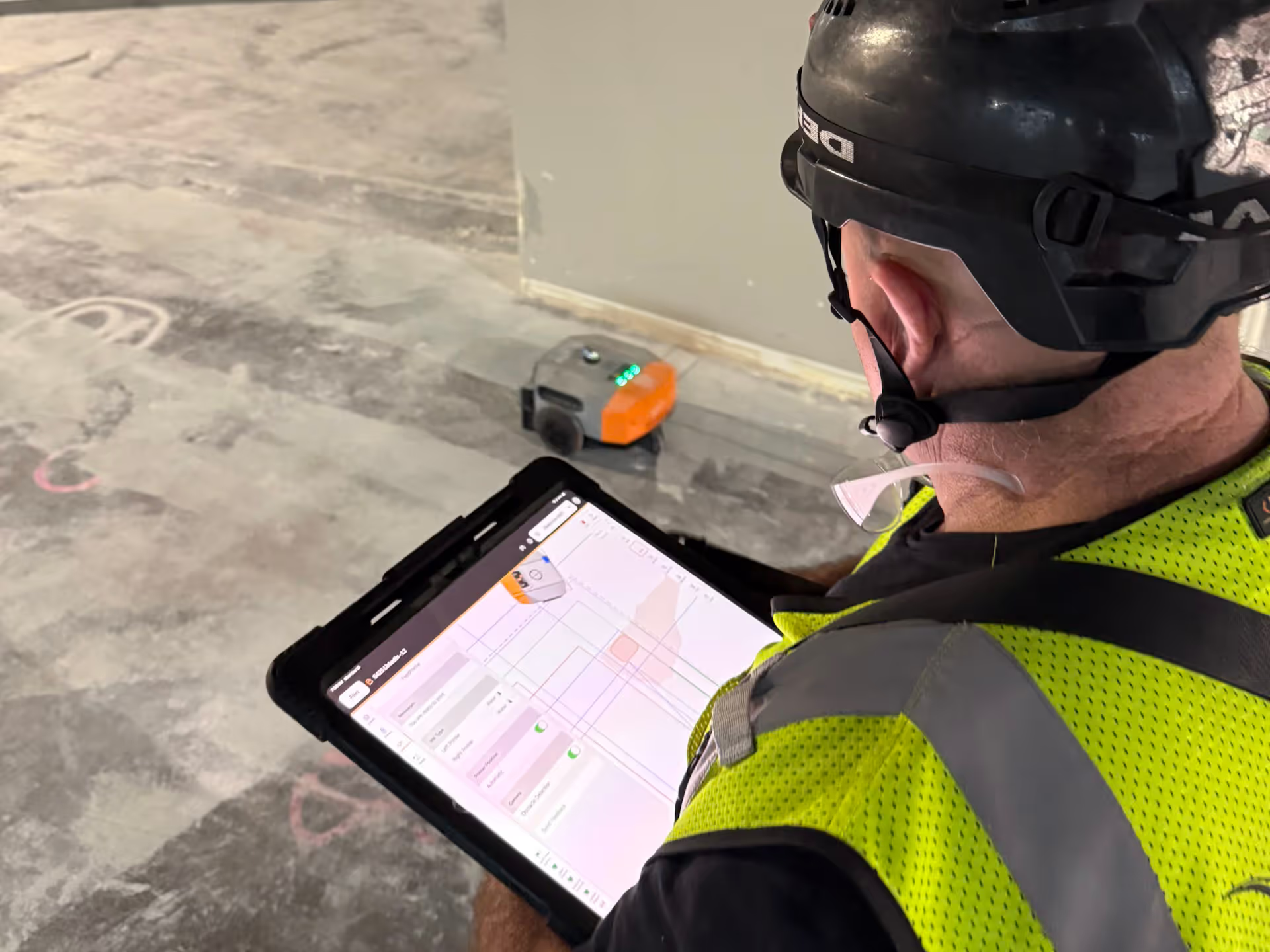
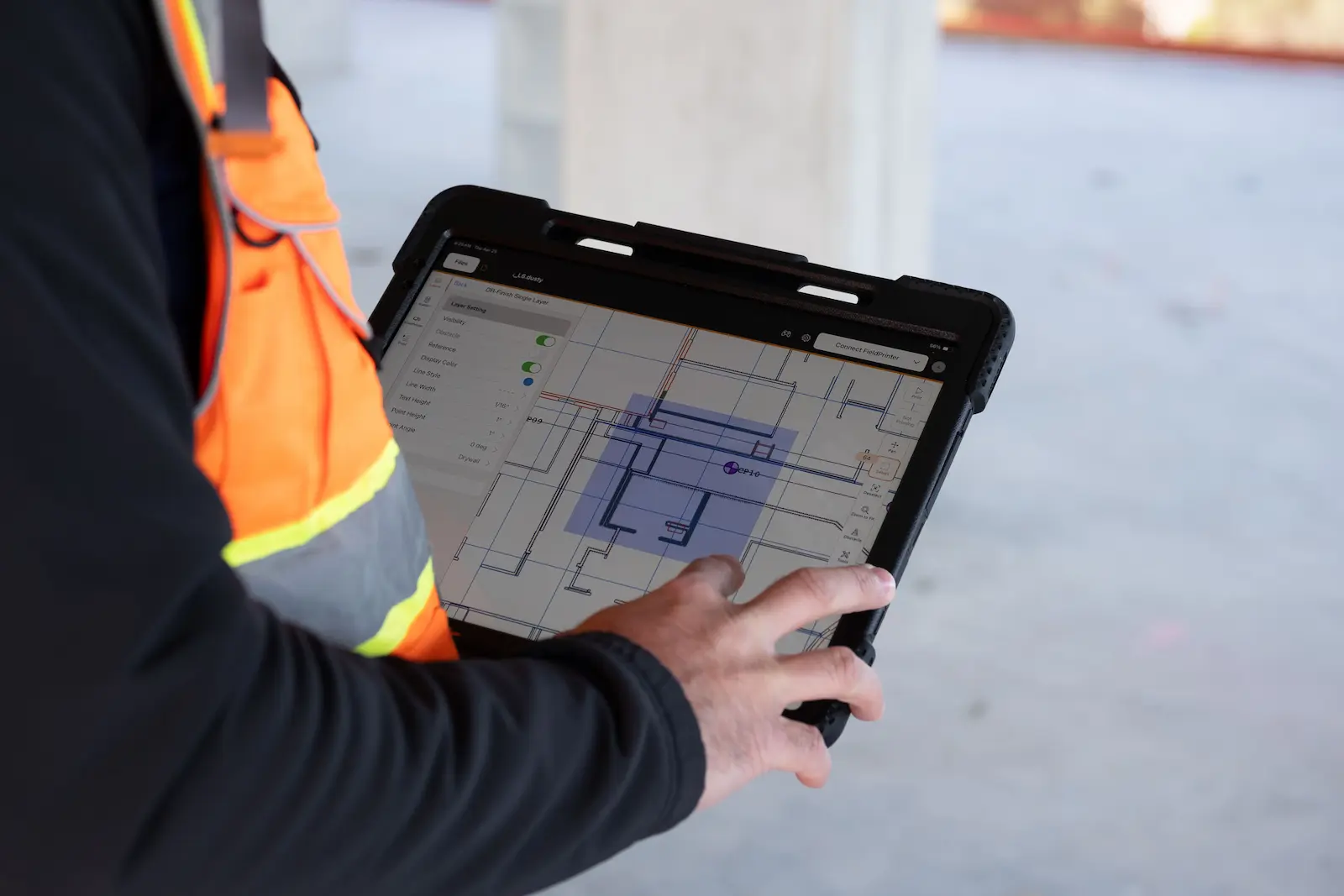
Dusty Robotics is a self-driving automated layout robot that prints the design directly on the slab or deck at 1/16-inch accuracy. On apartment construction projects, the workflow starts in Autodesk Revit or AutoCAD; VDC teams use the Dusty plugin to push the multi-trade layout to the robot. One operator runs the robot across the floor, and the printed layout lands ready for framing, MEP rough-in, and finishes. A floor cycle that used to take a layout crew days takes hours.

How much faster is robotic layout than manual layout on a multi-family project?

Robotic layout on a multifamily project is roughly 10x faster than manual layout. Daley's Drywall compressed layout schedules by 80% and saved $300,000 in direct labor over two years using Dusty. FrameTec cut framing-only layout from 12-16 hours per house down to 6-8 hours for multi-trade layout, doing twice the scope in half the time. The savings compound across stacked units, which is where multi-family layout economics get the most leverage.

How does automated layout work on podium and 5-over-1 construction?

Podium and 5-over-1 projects layer wood-frame structure above a concrete transfer slab, and the layout precision on the podium deck drives everything that stacks above it. Dusty prints the multi-trade layout (framing, plumbing risers, electrical rough-in, mechanical drops, and embedded MEP/FP) directly on the podium slab before framing starts. That eliminates the field RFIs about whether plumbing chases clear the framing, and gives every wood-frame floor above the same accurate starting reference. Post-tensioned podium slabs benefit most because the cost of a misplaced embed is highest there.

Does Dusty work on both wood-frame and steel-frame multi-family construction?

Yes. The Dusty FieldPrint Platform is structure-agnostic. It prints the design on whatever deck the trades are framing into, whether that's a concrete podium under wood framing (Type V), a steel-stud light-gauge mid-rise (Type III or IV), or a Type I concrete high-rise tower. The repetition payoff scales with the build; the more units, floors, and phases, the more return on automating the layout work.

Can Dusty Robotics work with prefabricated wall panels and panelized construction?

Yes. Prefab and panelized multi-family is one of the strongest fits for automated layout. Panel manufacturers already produce the digital model the robot needs. Dusty prints panel numbers, orientation marks, panel-to-panel connection details, and crew install instructions directly on the slab. Onsite pickup drops from hours to minutes per unit. The misread-panel mistakes that throw whole floors out of alignment go away because the factory and the field are working from the same set of files.

How does Dusty Robotics help with the construction labor shortage on multi-family projects?

Automated layout puts one operator with a robot in place of a multi-person manual layout crew. On multi-family projects, that matters most because qualified layout hands are hard to find and harder to scale across multiple buildings on the same project. An apprentice can run the Dusty system as effectively as a 20-year journeyman, so framing crews scale across phased buildings without doubling the layout team for every structure breaking ground.

What types of multi-family residential projects benefit from automated layout?

Repetition is the through-line across multi-family typologies, and that's where automated layout has the most leverage. Dusty works on:
  • Garden-style and wood-frame walk-up apartments (Type V, 2–4 stories)
  • Podium projects (5-over-1, 5-over-2, and similar wood-frame-over-concrete typologies)
  • Mid-rise apartments (Type III and Type IV, 5–8 stories)
  • High-rise residential towers (Type I concrete or steel)
  • Mixed-use buildings with ground-floor retail and residential above
  • Affordable and LIHTC developments
  • Student housing, senior housing, and build-to-rent communities

Want to learn more?

Find out how the Dusty Robotics FieldPrint Platform can help you increase quality, collaboration, and speed on your next construction project.
Learn more
The FieldPrinter is currently available in North America.
Top-down view of a Dusty Robotics construction robot on a concrete floor with black printed layout markings.Construction worker in an orange safety vest holding a tablet displaying a digital building blueprint.Compact autonomous robot with a grey and orange body on a floor marked with straight black lines.