The Construction Robot That Prints Your Model on the Floor
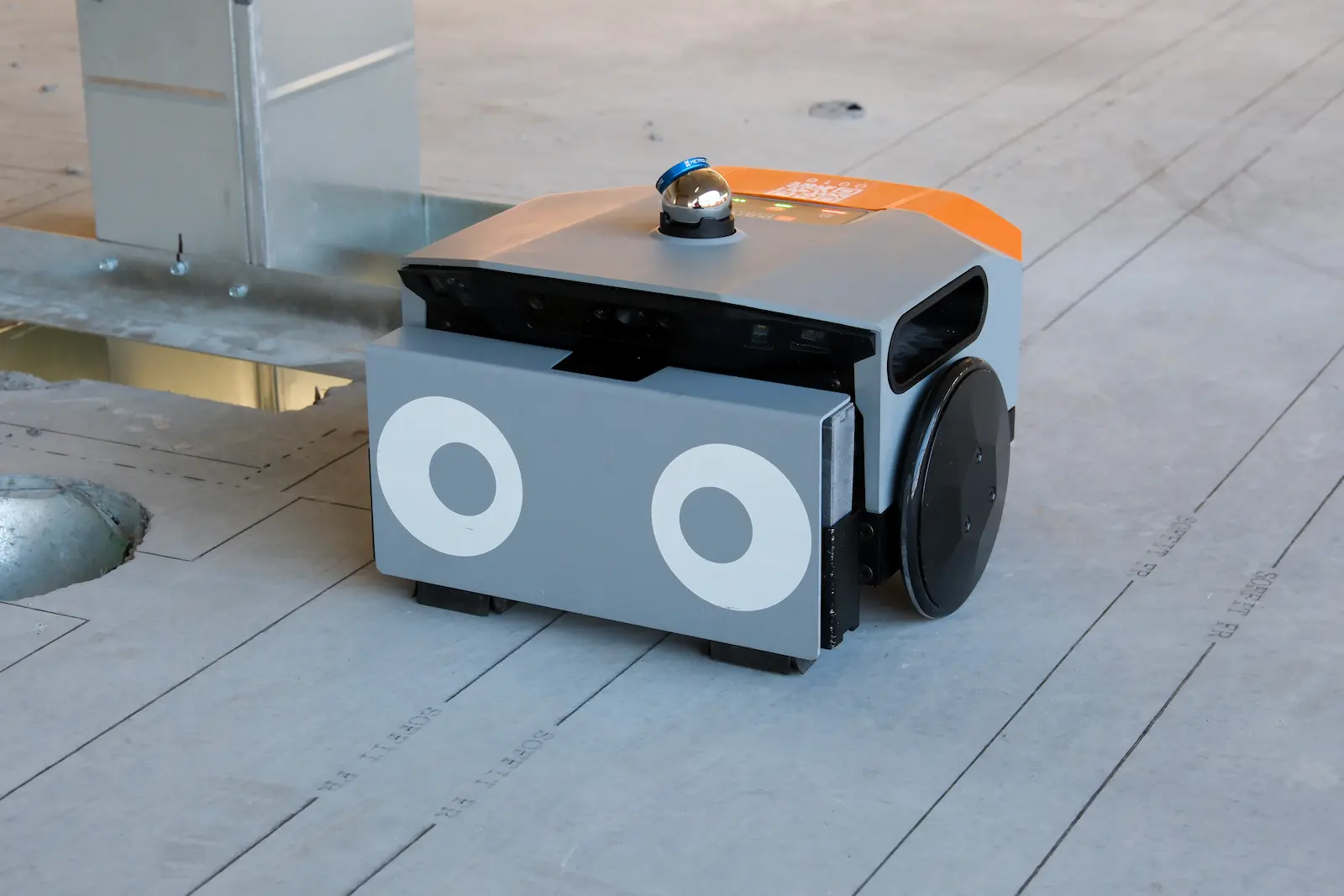
The construction robot built for layout
- Replaces tape, chalk line, and the total station for layout work.
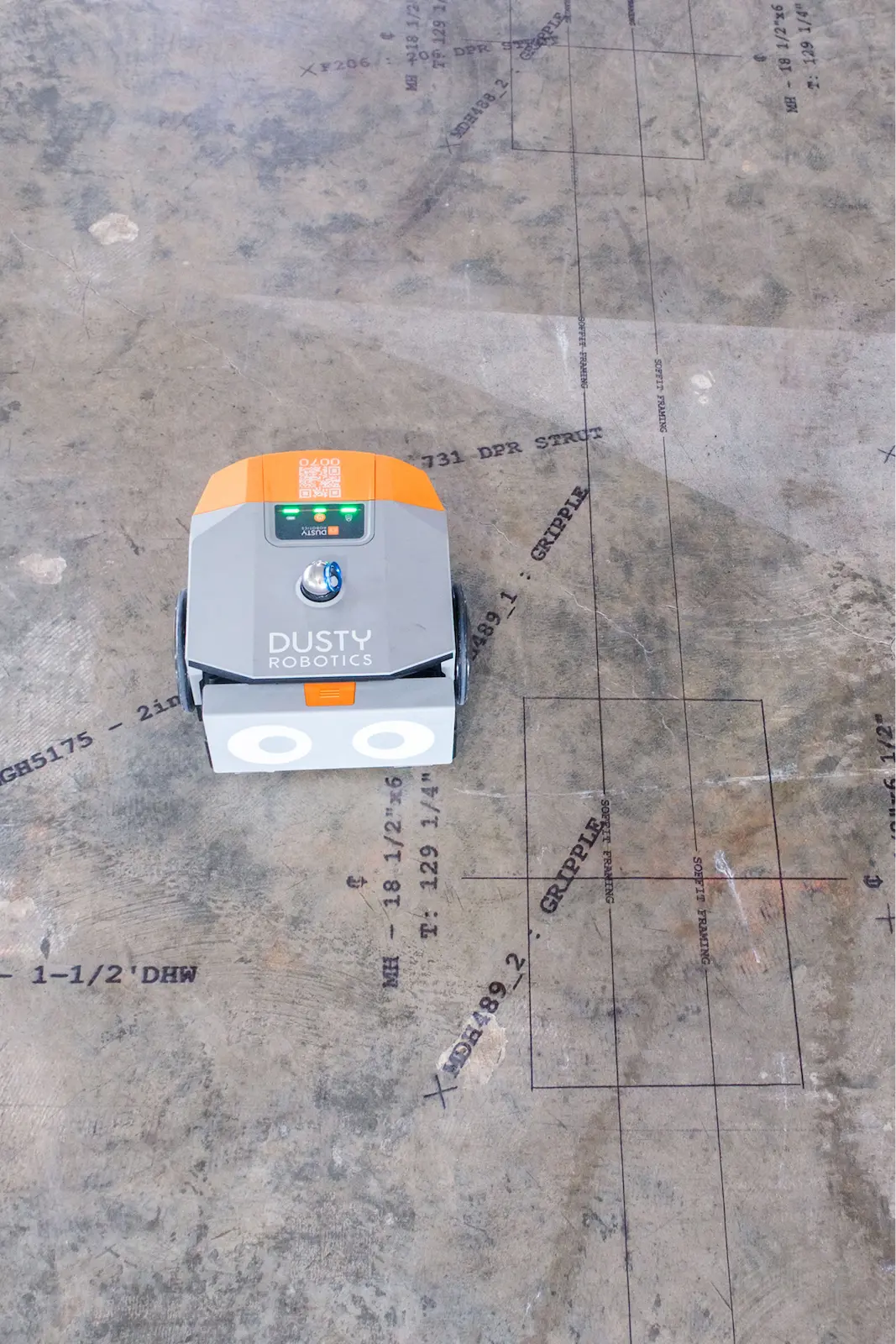
- Prints everything in the model at 1/16″ accuracy across the entire slab: walls, MEP, embeds, anchor points, callouts, sequencing notes, QR codes.
- Used today on data centers, healthcare, industrial, multifamily, and commercial projects across North America.
File to Field, automated
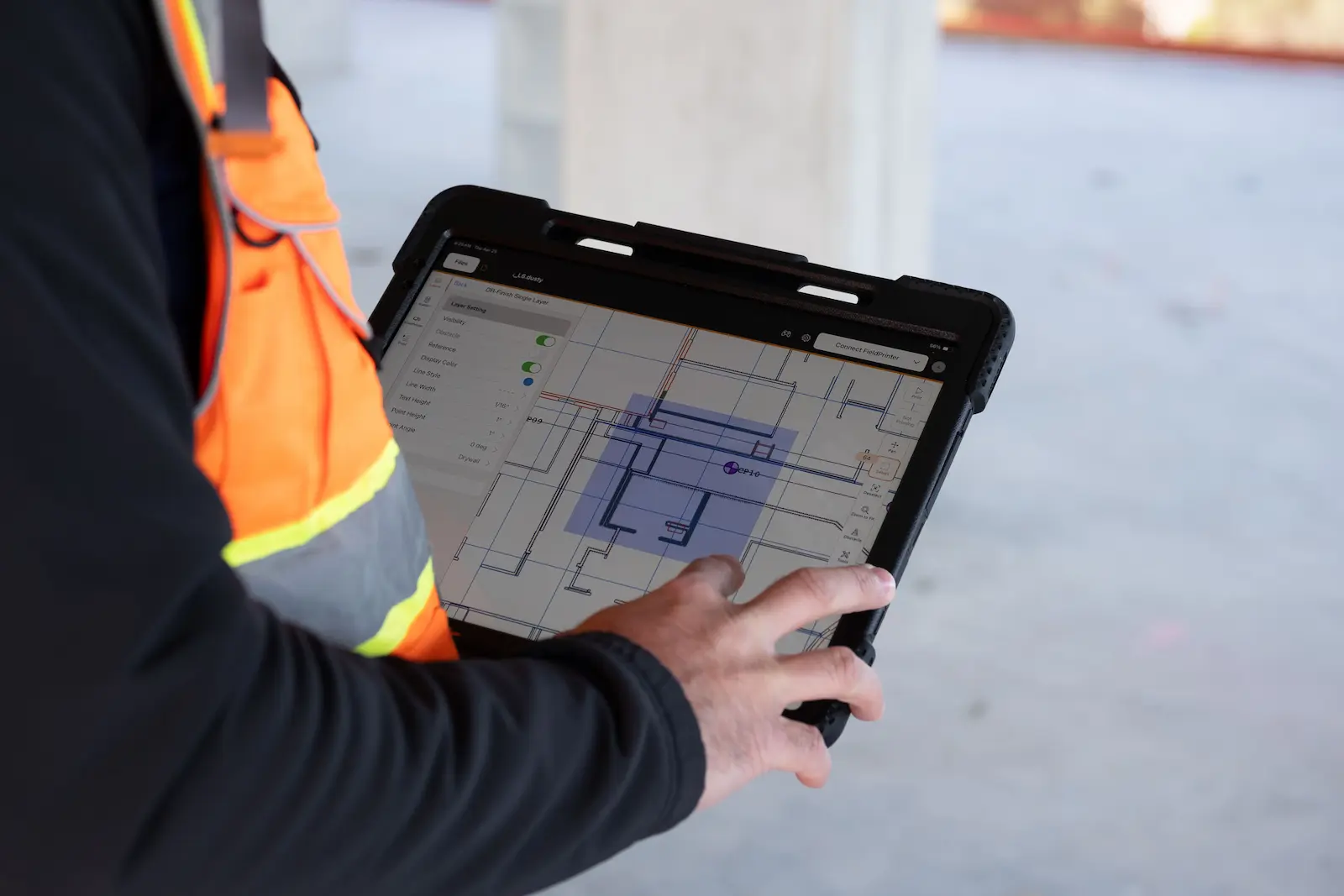
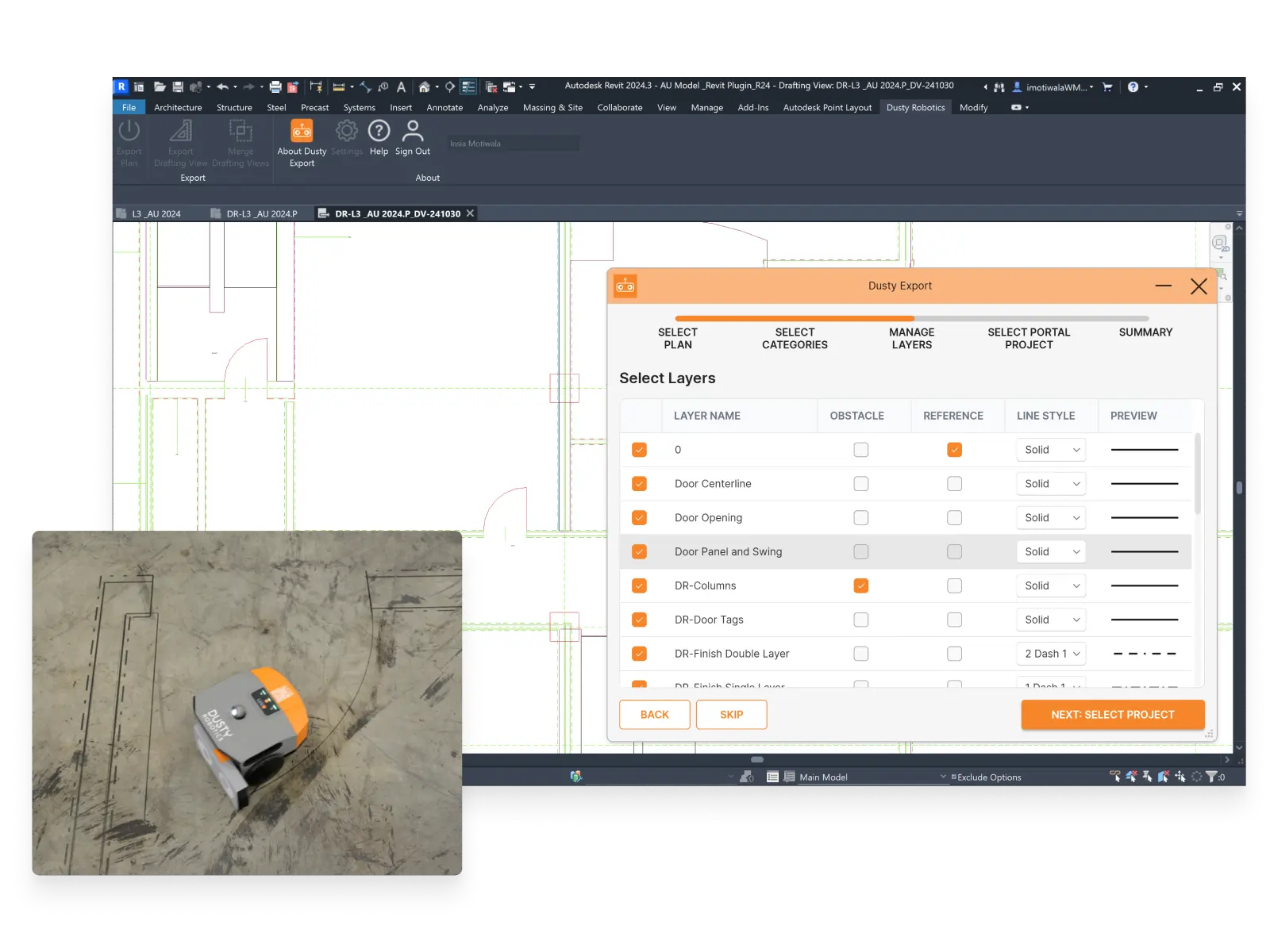
- File to Field: the coordinated BIM model ingests straight into the robot. No re-drafting between design and the slab.
- Physical AI handles obstacles, edges, and on-slab corrections in real time. The robot adapts to the jobsite as it works.
- 1/16″ accuracy at 600 DPI. The robot can print details no manual crew can match: multi-language callouts, QR codes, and dense annotation at full scale.
"Dusty is a layout robot that makes our job easier and faster in the long run. It's a tool we use to lay out our walls that's accurate and fast."

Every trade laid out in one print run
- All trades review and sign off on the layout file before print day, so what gets printed is what everyone agreed to.
- Up to 10x faster than manual layout. Whole floors finished in a few hours instead of days.
- AI-driven obstacle avoidance keeps the robot moving on obstacle-dense floors without a spotter.
See the full
FieldPrint Platform

Frequently asked questions
A total station is an electronic instrument that is used in construction for measuring distances and angles for surveying and construction layout. There are two types of total stations in construction: a total station and a robotic total station. However, total stations are considered outdated tools for construction layout. Fully-automated robotic layout is the better solution that completely automates the layout process by printing the digital model directly on the construction site surface.
What is a construction robot?
A construction robot is an autonomous machine that handles a specific jobsite task using a combination of GPS, computer vision, AI, and a digital plan as input. Common construction robot tasks include layout marking, bricklaying, demolition, rebar tying, material transport, and site inspection. Construction robots are used by general contractors and trade subcontractors to take over high-volume, repetitive, or physically demanding manual work that historically required large crews or specialty labor. Dusty Robotics builds construction robots in the layout category. The FieldPrinter 2 prints full-scale BIM model layout directly on the jobsite floor at 1/16″ accuracy, replacing tape measures, chalk lines, and total stations for new construction projects.
What types of construction robots are there?
Construction robots are split into seven main categories. Layout robots, like Dusty Robotics' FieldPrinter 2, print BIM model layout on jobsite floors. Bricklaying robots like Construction Robotics' SAM100 and Fastbrick Robotics' Hadrian X automate masonry. Demolition robots from Brokk handle controlled tear-downs. Inspection robots and drones, including Boston Dynamics' Spot and Skydio's autonomous drones, monitor progress and document conditions. Rebar-tying robots like Advanced Construction Robotics' TyBot fasten rebar on bridge decks and large slabs. Autonomous heavy equipment from Built Robotics turns bulldozers and excavators into self-driving machines. 3D printing robots extrude concrete or polymer for full-structure printing. Dusty Robotics operates in the layout category and pioneered autonomous BIM-to-field layout for new construction.
How does a construction layout robot work?
A construction layout robot takes a coordinated BIM model, typically from Autodesk Revit or AutoCAD, and prints it as full-scale layout lines directly on the concrete slab. Dusty Robotics' FieldPrinter 2 ingests the model through the Dusty Portal, where all trades review and sign off on what gets printed. On print day, a single operator positions the robot, calibrates against control points, and the FieldPrinter 2 prints walls, MEP runs, embeds, anchor points, callouts, and even QR codes at 1/16″ accuracy and 600 DPI. AI-driven obstacle avoidance keeps the robot moving on cluttered floors without a spotter. The robot prints layout up to 10x faster than manual methods using tape and chalk lines.
How accurate is automated construction layout?
Automated construction layout systems print to tolerances tighter than most downstream construction tasks need. Dusty Robotics' FieldPrinter 2 prints at 1/16″ accuracy across the entire slab at 600 DPI, with every line referenced back to the coordinated BIM model. That accuracy is tighter than the tolerances for framing, MEP rough-in, drywall, and most finish work, so layout is rarely the source of a field-quality problem on projects using Dusty. Across 300+ million square feet printed on Dusty robots, customers like McCarthy, Mortenson, JE Dunn, and DPR report layout work that aligns with the model on the first pass. Compare that to manual methods using tape and chalk, which compound errors over large floor areas.
What types of projects use construction robots?
Construction robots are deployed across data centers, healthcare facilities, industrial manufacturing buildings, multifamily residential, and large commercial projects in North America. Dusty Robotics' FieldPrinter 2 has printed over 300 million square feet of layout across more than 1,000 buildings, with the highest concentration on data centers, hospitals, and complex healthcare construction where coordination across multiple trades drives schedule risk. Top general contractors using Dusty include DPR, JE Dunn, Skanska, McCarthy, Mortenson, Swinerton, and Barton Malow. Trade subcontractors like Southland (mechanical), California Drywall, and NCI also use Dusty's construction robots for trade-specific layout. Tilt-up concrete, framing, and drywall projects all benefit from automated BIM-to-field layout when project size justifies the deployment.
Do construction robots replace construction workers?
Construction robots like Dusty Robotics' FieldPrinter 2 augment skilled construction workers rather than replace them. Layout is one of the most physically demanding and error-prone parts of a project, and it ties up the most experienced foremen and superintendents on a crew. Dusty's FieldPrinter 2 lets one operator print layout for every trade in one pass, which frees senior layout staff to focus on supervisory and quality work. McCarthy reported 3,000 hours of layout labor saved on its Kaiser Hospital project after deploying Dusty. The construction labor shortage means contractors need every skilled worker on higher-value tasks, and automated layout robots are one of the cleaner ways to redirect that labor.
How is Dusty different from other construction robots?
Dusty Robotics was the first company to ship autonomous BIM-to-field layout commercially, and the FieldPrinter 2 prints multiple trades' layout in a single coordinated pass instead of one trade at a time. The Dusty Portal aligns all trades on the same coordinate system and lets each one review and sign off on the print file before print day, so what the field sees on the slab is what everyone agreed to. Compared to manual layout with a total station or alternatives like HP SitePrint and Rugged Robotics, Dusty's FieldPrinter 2 prints at higher accuracy (1/16″ at 600 DPI), prints richer content beyond layout lines (callouts, QR codes, multi-language annotations), and works through obstacle-dense floors with AI-driven navigation. Customers like McCarthy, Mortenson, and JE Dunn use Dusty across data centers and healthcare projects where multi-trade coordination drives schedule.
Want to learn more?