The Drywall Robot That Prints Every Wall Before You Frame
See the drywall robot on your project
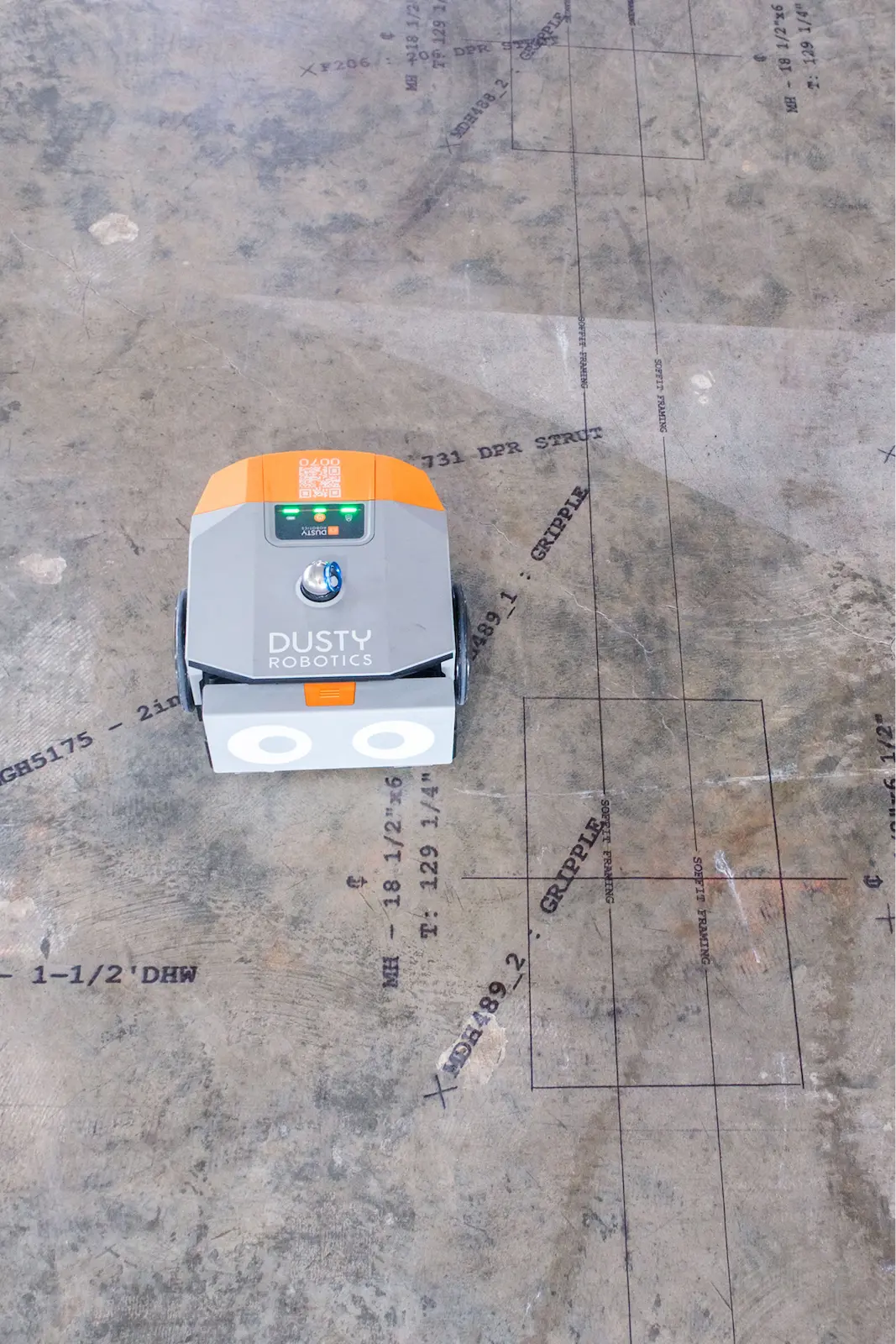
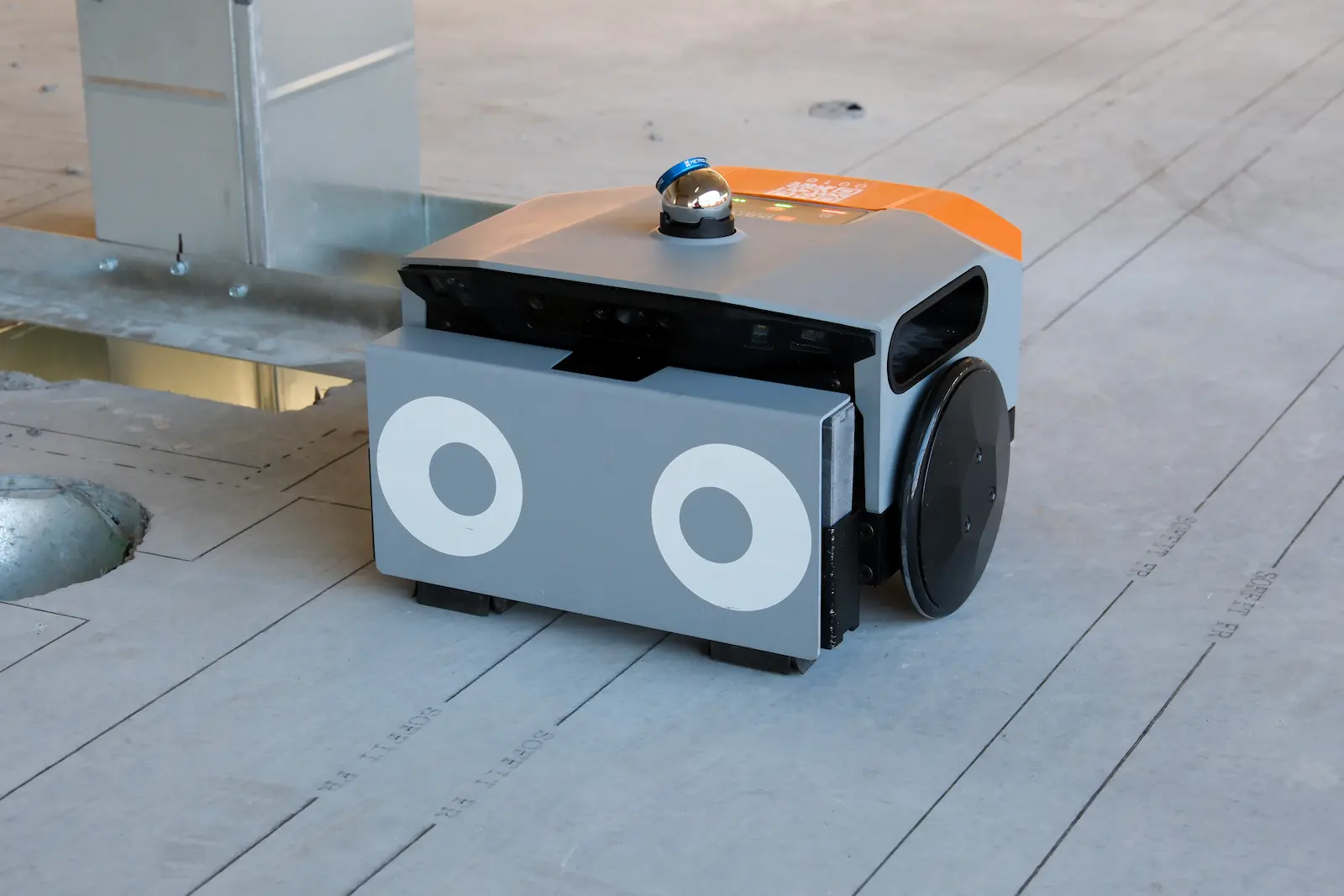
A drywall robot built for layout
- Runs the whole floor autonomously from the coordinated BIM or CAD file, with no point-by-point marking.
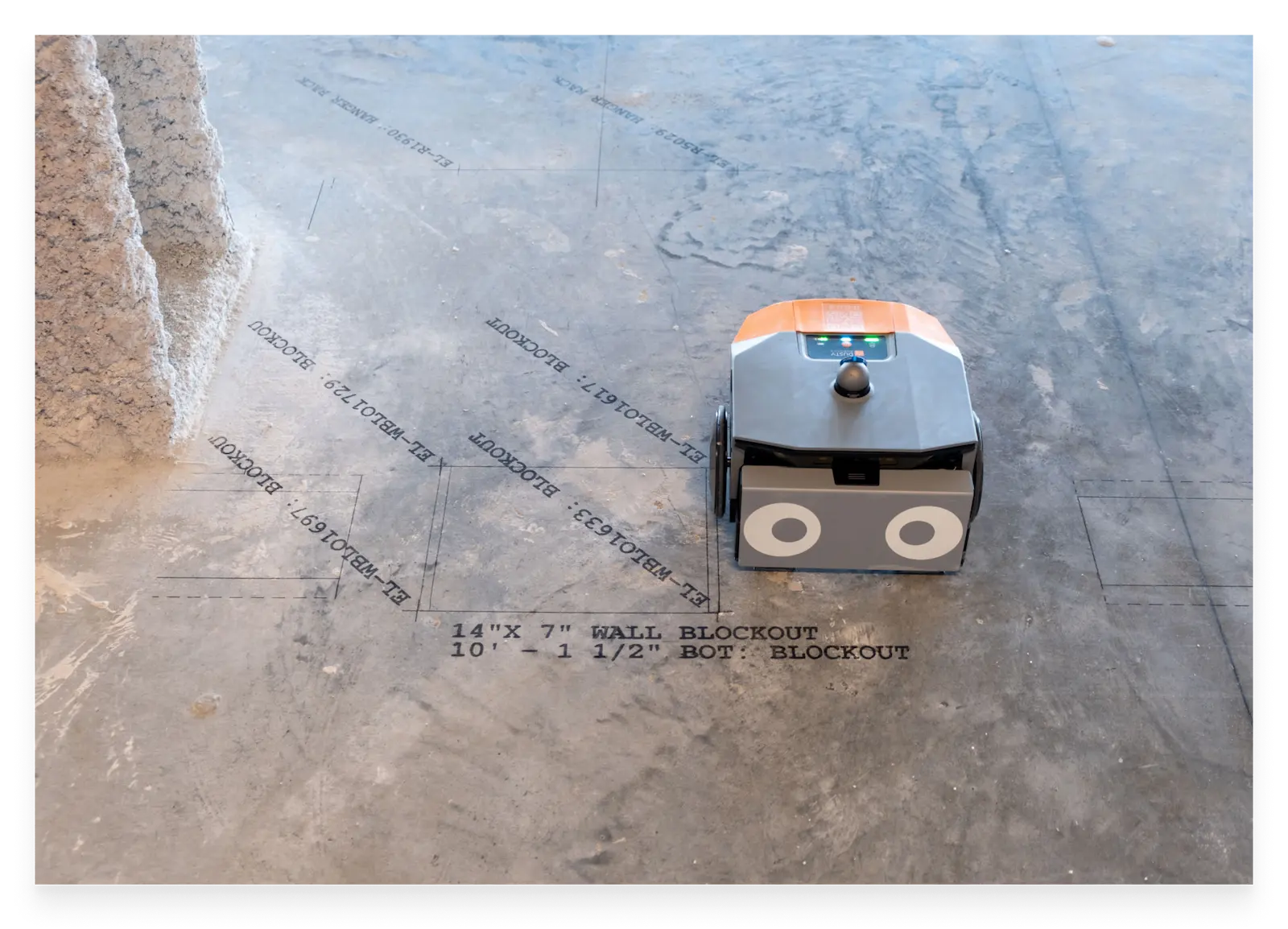
- Prints stud and track lines, rough openings, fire and sound ratings, furring, backing, and room labels at 1/16″ accuracy.
- Lays down framing and finish-face lines together in one pass: two parallel lines as close as 1″ apart, matching the standard 5/8″ drywall offset.
Prints what chalk lines can't
- Puts fire- and sound-rated assembly callouts, ADA clearances, and door and window tags on the floor where the work happens, no iPad required.
- Prints within 1.25″ alongside and 0.825″ in front of any wall, obstacle, or slab edge: complete coverage, with nothing left to chalk by hand.
- Eliminates layout rework: when framing starts from a printed model, a misread tape measure can't shift a wall, and the RFI never gets written.
Dusty doesn't replace my layout foremen. It's their tool, and this is how much better we are with that tool.


Keep your best people on the wall
- Replaces days of hands-and-knees chalk work with one operator walking behind the robot.
- Makes layout timelines predictable, so estimators bid wall scopes tighter and win more work.
- Prints reference lines, tags, and clearances for the trades that follow, so framers stop returning to fix conflicts that were never theirs.
See the full
FieldPrint Platform

Frequently asked questions
A total station is an electronic instrument that is used in construction for measuring distances and angles for surveying and construction layout. There are two types of total stations in construction: a total station and a robotic total station. However, total stations are considered outdated tools for construction layout. Fully-automated robotic layout is the better solution that completely automates the layout process by printing the digital model directly on the construction site surface.
What is a drywall robot?
A drywall robot automates part of the wall-building process, and the category splits in two. Finishing robots like Canvas and Okibo work after the board is hung, automating taping, sanding, and painting. Layout robots work before the first stud goes up. Dusty Robotics' FieldPrinter is a drywall layout robot: it prints the full framing layout directly on the concrete slab at 1/16″ accuracy, including stud and track lines, rough openings, fire and sound ratings, and ADA notes, straight from the coordinated BIM model. Wall contractors like KHS&S, California Drywall, and RG Construction run Dusty's FieldPrinter to lay out framing scopes roughly 10x faster than chalk lines. In both halves of the category, the robot takes on repetitive precision work so the crew spends its time building walls.
Can a robot hang drywall?
Robots already handle major parts of the drywall scope, though hanging the board itself is still crew work on production jobsites. Canvas builds drywall finishing robots that tape, mud, and sand hung board using machine vision, delivering Level 4 and Level 5 finishes and cutting finishing schedules by up to 60%. Okibo's robots plaster and paint. Humanoid prototypes that lift and fasten sheets exist in demos, but not at commercial scale. Dusty Robotics' FieldPrinter automates the start of the wall: it prints the complete framing layout on the slab at 1/16″ accuracy before the first stud goes up, with 300M+ square feet printed across 1,000+ buildings. Wall contractors combine the two ends today, printed layout up front and robotic finishing at the back, with crews hanging board in between.
How does Dusty's drywall layout robot work?
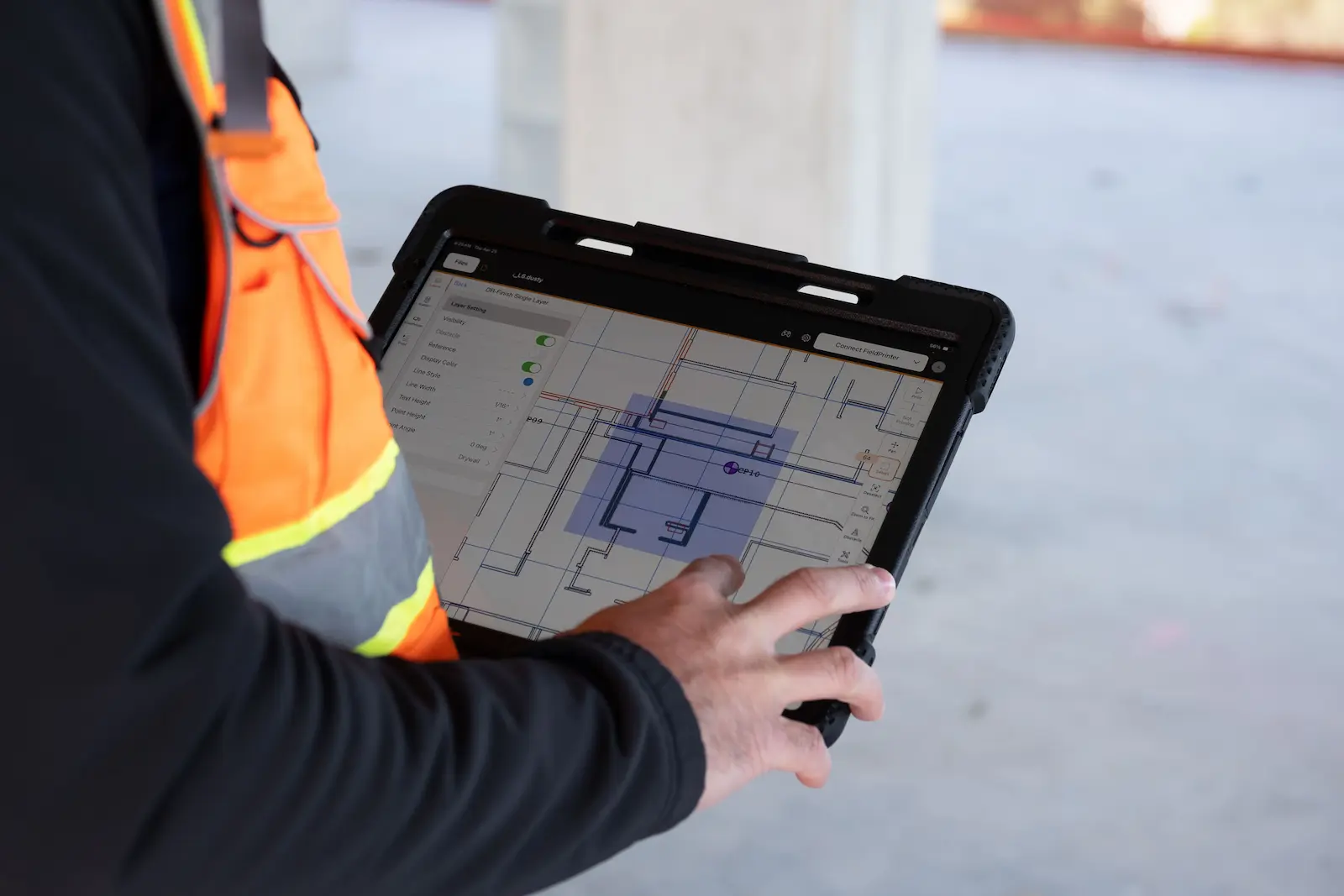
Dusty Robotics' FieldPrinter reads the coordinated BIM or CAD model and prints it on the slab. The wall contractor's detailer prepares the layout file through Dusty's plugin for Revit or AutoCAD, every trade reviews and signs off in the Dusty Portal, and on print day one operator sets control points and runs the robot across the floor. The FieldPrinter prints stud and track lines, rough openings, fire- and sound-rating callouts, ceiling heights, and room labels at 1/16″ accuracy, and prints framing and finish-face line pairs in a single pass. It prints within 1.25″ alongside an obstacle and 0.825″ in front, so layout reaches column furring, stub-ups, and slab edges without a chalk-line touch-up pass. Crews walk onto a floor where every wall is already marked and start framing.
How accurate is robotic drywall layout?
Dusty Robotics' FieldPrinter prints drywall and framing layout at 1/16″ accuracy at 600 DPI. Manual layout with tape measures and chalk lines varies with the crew, and total-station workflows measure to about 1/8″ before a human marks each point by hand, adding drift. Printed layout removes the hand-marking step: every line ties back to the same coordinated model the trades signed off on. For wall crews the payoff is rework avoided. When two framing crews build toward each other from printed lines, the walls meet, with no discrepancy to tear apart and rebuild. RG Construction reported framing accuracy that put a life-sciences project about four weeks ahead of schedule, with the other trades catching up to the framers.
How much faster is a drywall robot than manual layout?
Dusty Robotics' FieldPrinter lays out framing scopes roughly 10x faster than manual chalk-line layout. On the Fontainebleau in Las Vegas, wall contractor KHS&S cut a month-long layout process down to seven days. RG Construction finished framing about four weeks ahead of schedule on a life-sciences project after switching to printed layout. The speed comes from removing steps: one operator runs the robot while it prints every wall, opening, and callout in a single autonomous pass, replacing the two-to-four-person crew that measured and snapped lines for days. Faster, more predictable layout also changes the business: when layout timelines stop being a guess, drywall and framing contractors can bid wall scopes tighter and take on more work.
Does a drywall layout robot work for metal stud and wood framing?
Yes. Dusty Robotics' FieldPrinter prints layout for both metal stud and wood framing. On metal stud jobs, the printed layout puts every stud and track location, rough opening, and header exactly where the coordinated model says, so openings don't drift out of alignment between crews. On wood framing, it handles angled walls, headers, shear walls, anchor bolts and holdowns, and backing and blocking locations. The robot prints on concrete slabs across commercial, healthcare, multifamily, and mission-critical projects. Whatever the wall assembly, the crew builds from the same printed line at 1/16″ accuracy, and the layout on the floor matches the model every trade coordinated.
Will a drywall robot replace layout crews?
No. Dusty Robotics' FieldPrinter changes the layout crew's job. One operator runs the robot, and the layout expertise moves upstream into the model, where a detailer decides what gets printed. The crews who used to spend days on their knees snapping chalk lines and breathing chalk dust shift to production framing, which is where wall contractors are short-handed. Field crews at Level 5 and Dale Construction describe the change in physical terms: layout without the hands-and-knees work and without the fatigue injuries that come with it. With the industry unable to staff enough experienced layout people, contractors use automated layout to spread the experts they have across more projects, with the robot as an extension of the layout crew.
Want to learn more?