Dusty vs. LightYX: Layout That Stays on the Slab
Compare Dusty and LightYX on your project
Printed layout that stays on the slab
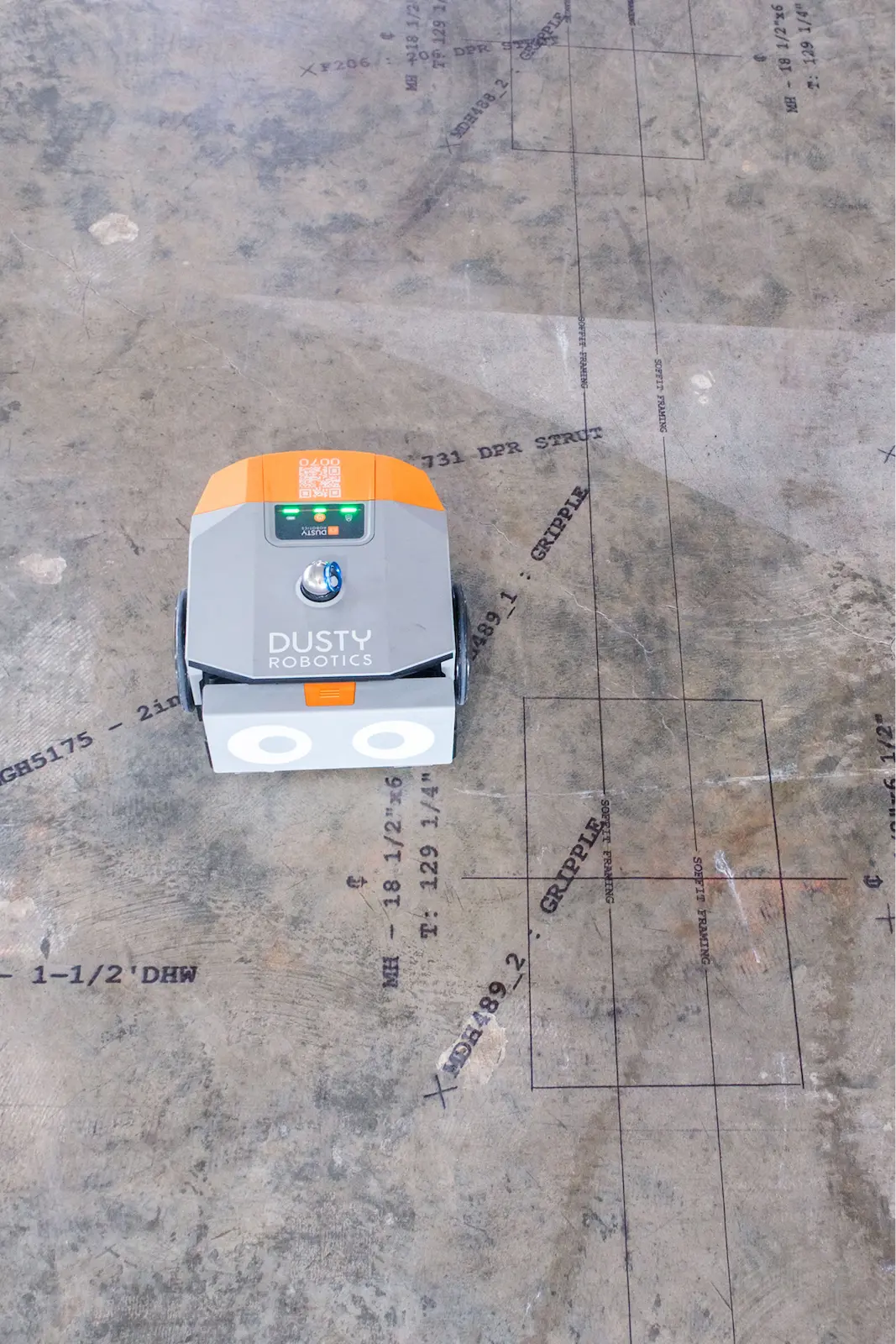
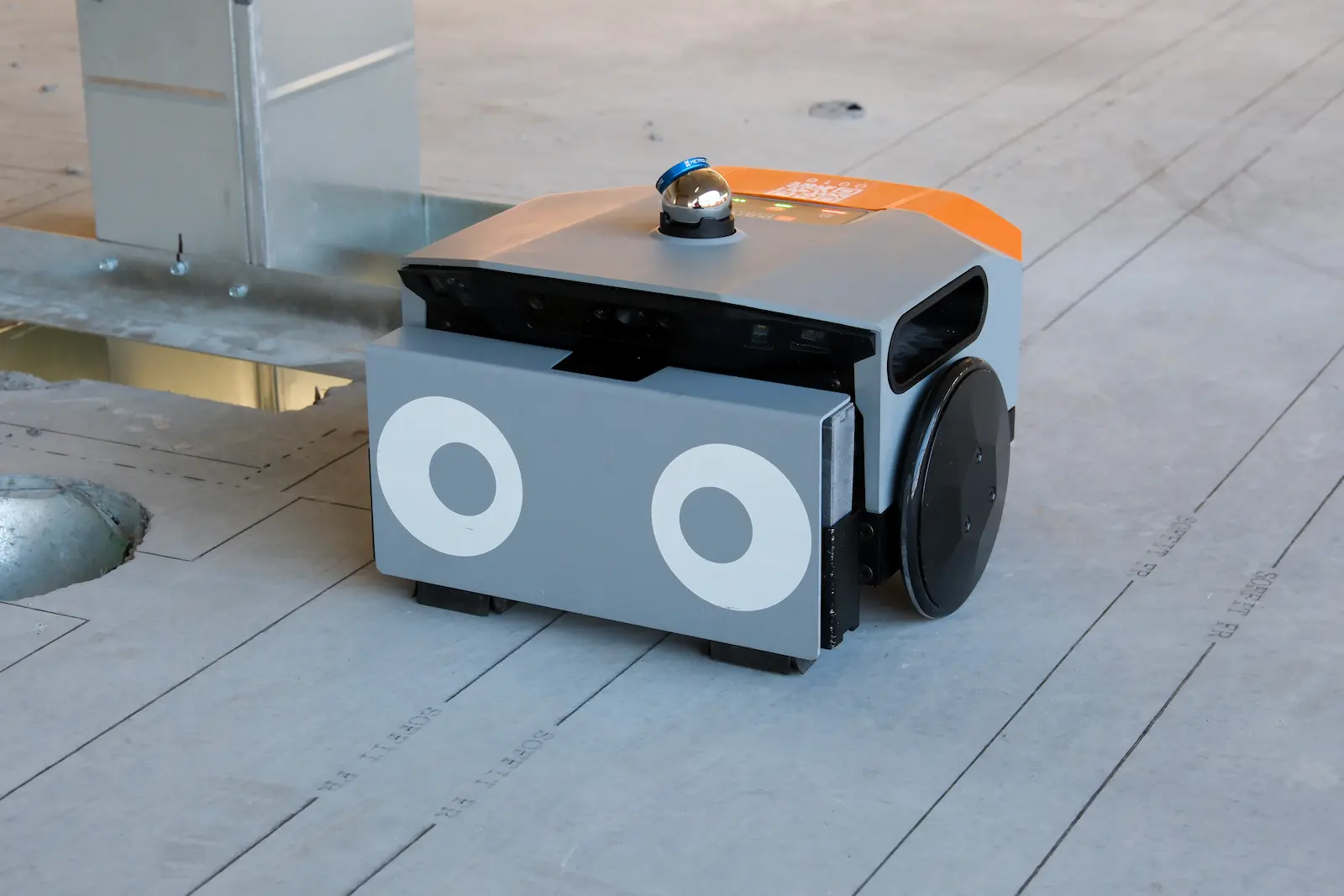
- Prints walls, MEP runs, embeds, anchor points, callouts, and QR codes directly on the concrete at 1/16″ accuracy.
- Every trade that follows references the same printed marks, so layout doesn't get re-shot or re-projected as the job moves. The ink lasts as long as the job needs it, and comes off with standard jobsite cleaning when it doesn't.
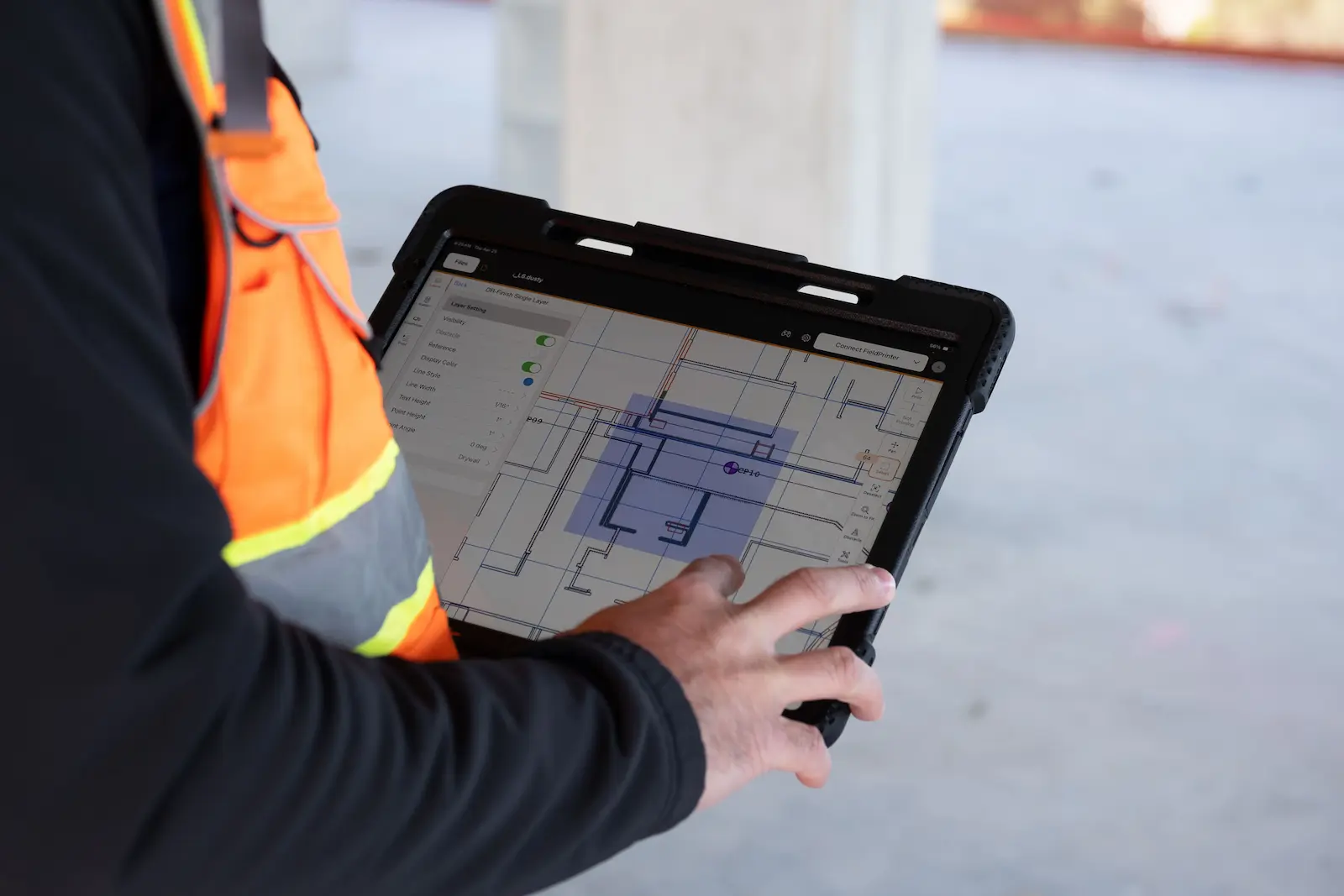
- Set the model once in the Dusty Portal. What prints on the slab is what every trade signed off on.
Automated all the way to the mark
- Multi-trade layout in one print run, billed per trade, from one coordinated model. No hand-marking step between the model and the slab.
- Prints QR codes, install notes, and torque-spec callouts right where the work happens, detail a hand-traced markup can't carry.
- The model comes straight from Revit or AutoCAD through the Dusty plugin and Portal, with every trade signed off before print day.
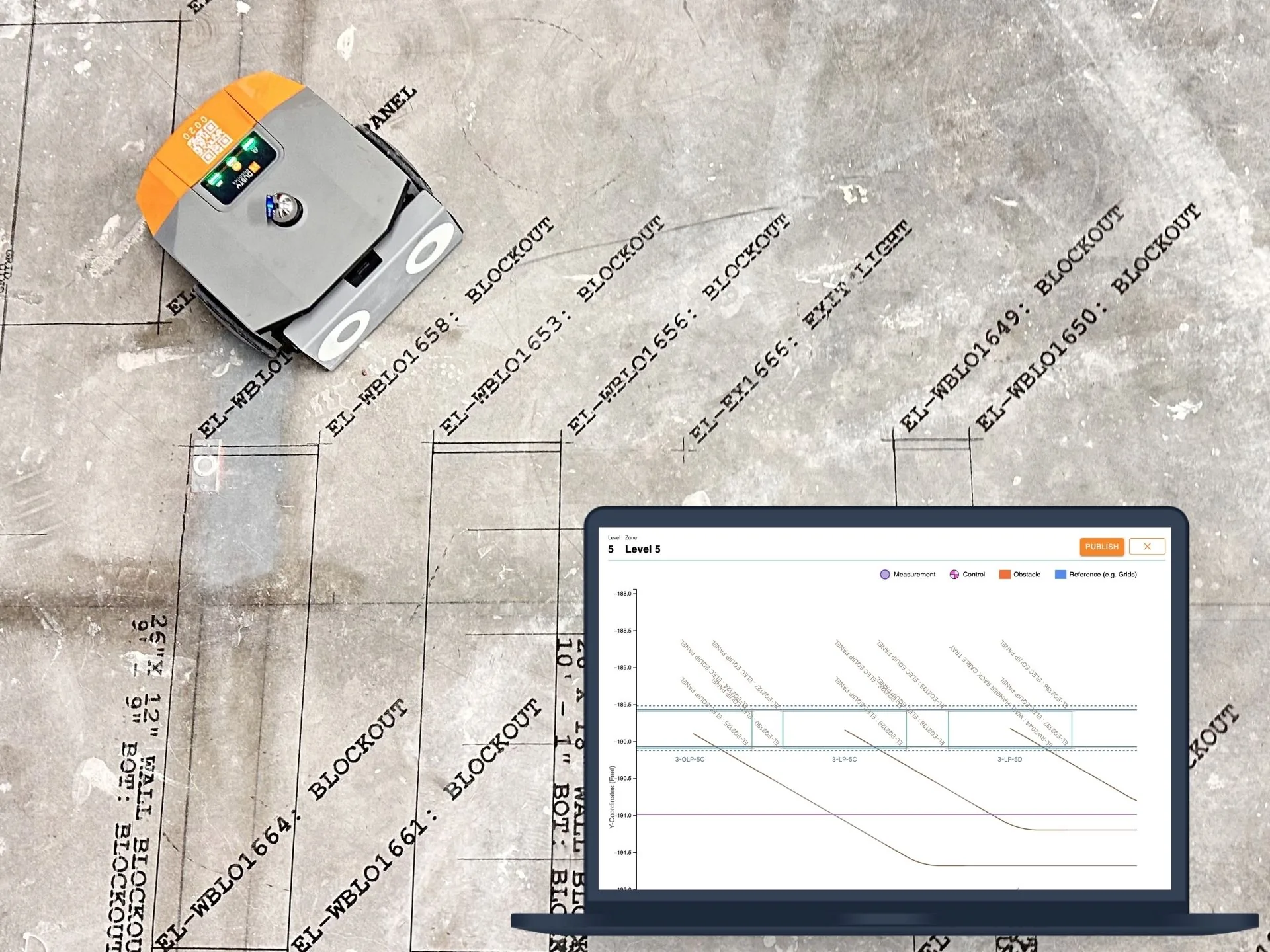
We're saving a lot of time and effort from individual layout activities—coming out here the traditional way, whether it be tape or a total station. Instead, their layout is incorporated into the Dusty file and printed directly in the field.


Proven at scale, built for the crew
- One operator prints a whole floor's layout. Senior layout staff move to supervisory and quality work instead of kneeling over chalk lines.
- Up to 10x faster than manual layout with tape and chalk. Whole floors finished in hours instead of days.
- Used by DPR, JE Dunn, Skanska, McCarthy, Mortenson, and Swinerton across data centers, healthcare, and industrial projects.
See the full
FieldPrint Platform

Frequently asked questions
A total station is an electronic instrument that is used in construction for measuring distances and angles for surveying and construction layout. There are two types of total stations in construction: a total station and a robotic total station. However, total stations are considered outdated tools for construction layout. Fully-automated robotic layout is the better solution that completely automates the layout process by printing the digital model directly on the construction site surface.
What's the difference between Dusty Robotics and LightYX?
Dusty Robotics' FieldPrinter is automated layout: it prints the coordinated BIM model directly on the concrete slab at 1/16″ accuracy, as permanent marks every trade builds from for the rest of the job. LightYX is a laser projection system: it displays the model on a surface, and crews still mark out their layout by hand based on the projection, or keep the projector on site while each trade installs. Dusty prints multi-trade layout from one coordinated model with per-trade layers, plus QR codes, text, and callouts that stay readable on the slab. Dusty's FieldPrinter has printed 300M+ square feet across 1,000+ buildings for general contractors like McCarthy, DPR, and Mortenson. For wall or ceiling guidance on finishes work, laser projection is a useful tool; for slab layout and trade coordination, automated layout is the fit.
Does LightYX print layout or project it?
LightYX projects layout. It uses a laser to display lines and points on a surface, which means the layout is visible while the unit is set up over that area. LightYX is not automated layout, because it projects layout instead of marking it directly on the ground. Dusty Robotics' FieldPrinter prints layout, laying physical ink directly on the concrete slab at 1/16″ accuracy. The practical difference shows up over the course of a build: installing from a projection means keeping the unit on site through each trade's work or tracing the marks by hand, while a printed mark stays on the floor for framing, MEP, finishes, and every trade that follows. Teams that want a permanent reference on the slab choose printing; teams doing finishes layout on walls or ceilings sometimes use projection for its surface flexibility. Dusty's FieldPrinter 2 also prints QR codes and text labels that a moving projection can't leave behind.
Is laser projection layout as accurate as printed automated layout?
Both reach tight accuracy: LightYX projects at 1/16″ and Dusty Robotics' FieldPrinter prints at 1/16″ across the slab. The difference is how long that accuracy is usable in the field. A projected mark holds its position while the unit is set up over that spot; once the projector moves to the next area, the marks in the previous area are no longer there unless someone traces them by hand. A printed mark from Dusty's FieldPrinter stays fixed on the concrete, referenced back to the coordinated BIM model, for every trade that walks the floor for the rest of the build. Across 300M+ square feet printed, general contractors like McCarthy, Mortenson, and JE Dunn report layout that aligns with the model on the first pass.
Can Dusty's printed layout be removed after installation?
Yes. Dusty Robotics designed its ink to stay visible and durable through layout and installation, not to be permanent. In most cases, Dusty ink comes off concrete with common jobsite cleaning methods: foot traffic and sweeping fade it naturally, water and a stiff-bristle brush or a mild concrete-safe cleaner handle most of the rest, and pressure washing or a floor scrubber removes it fully where finishes require a clean slab. Results vary with ink type, concrete porosity, and time on the slab, so test a small area first. Contractors who know they'll want marks gone choose Dusty's water-based ink for easier removal. Full guidance lives in Dusty's Help Center article, How to Remove Dusty Ink from Concrete.
Is Dusty or LightYX better for floor and slab layout?
For floor and slab layout on new construction, Dusty Robotics' FieldPrinter is built for the job: it prints permanent, multi-trade layout directly on the concrete at 1/16″ accuracy, including walls, MEP runs, embeds, anchor points, and QR codes that stay readable for the whole build. LightYX is a laser-projection system whose strength is form-factor flexibility across floors, walls, ceilings, and curved surfaces, which makes it useful for finishes guidance on vertical and overhead surfaces. If the need is a permanent layout record on the slab that every trade references over months of work, Dusty's printed workflow is the fit. If the need is temporary guidance on a wall or ceiling for finishes, projection is a reasonable tool. Many teams evaluate both against the specific surfaces and trades on their project.
Does Dusty integrate with BIM the way LightYX does?
Yes. Dusty Robotics' FieldPrinter pulls layout directly from the coordinated BIM model through the Dusty plugin for Autodesk Revit and AutoCAD and the Dusty Portal, where all trades review and sign off before print day. LightYX integrates with BIM 360 and Trimble robotic total stations. Both connect to the model; the difference is what reaches the field. Dusty prints the coordinated model as permanent ink on the slab, including text, callouts, and QR codes, so the model information stays at the point of work. LightYX projects the model onto a surface for the current task. For teams that want the BIM model committed to the floor as a lasting, multi-trade record, Dusty's FieldPrinter delivers that; for projected guidance across multiple surface types, LightYX's approach applies.
Want to learn more?