The Floor Layout Robot That Prints Your Model on the Slab
Your model, printed on the slab
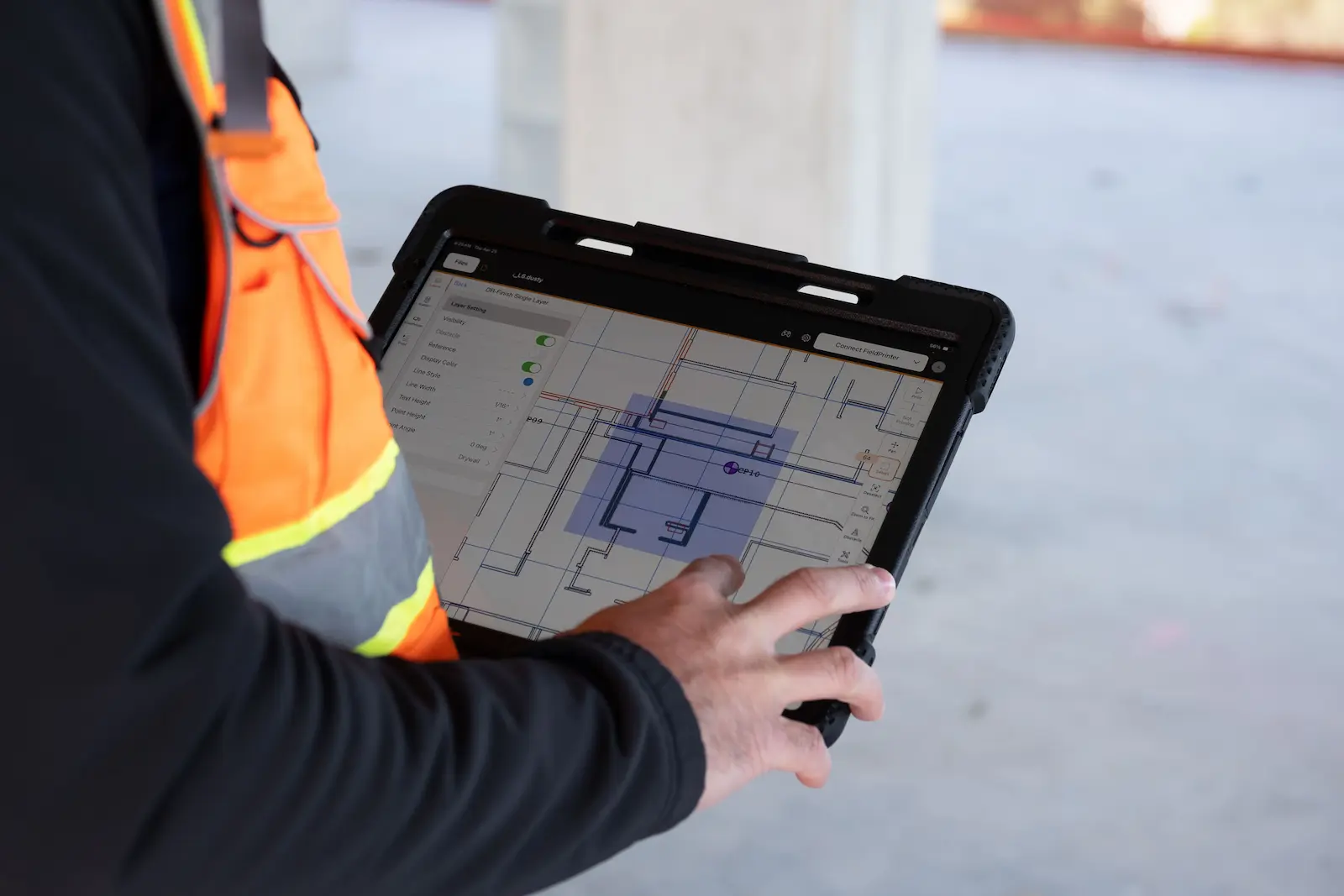
- Reads your coordinated BIM or CAD model and prints the full layout file in one autonomous run. No point-by-point translation.
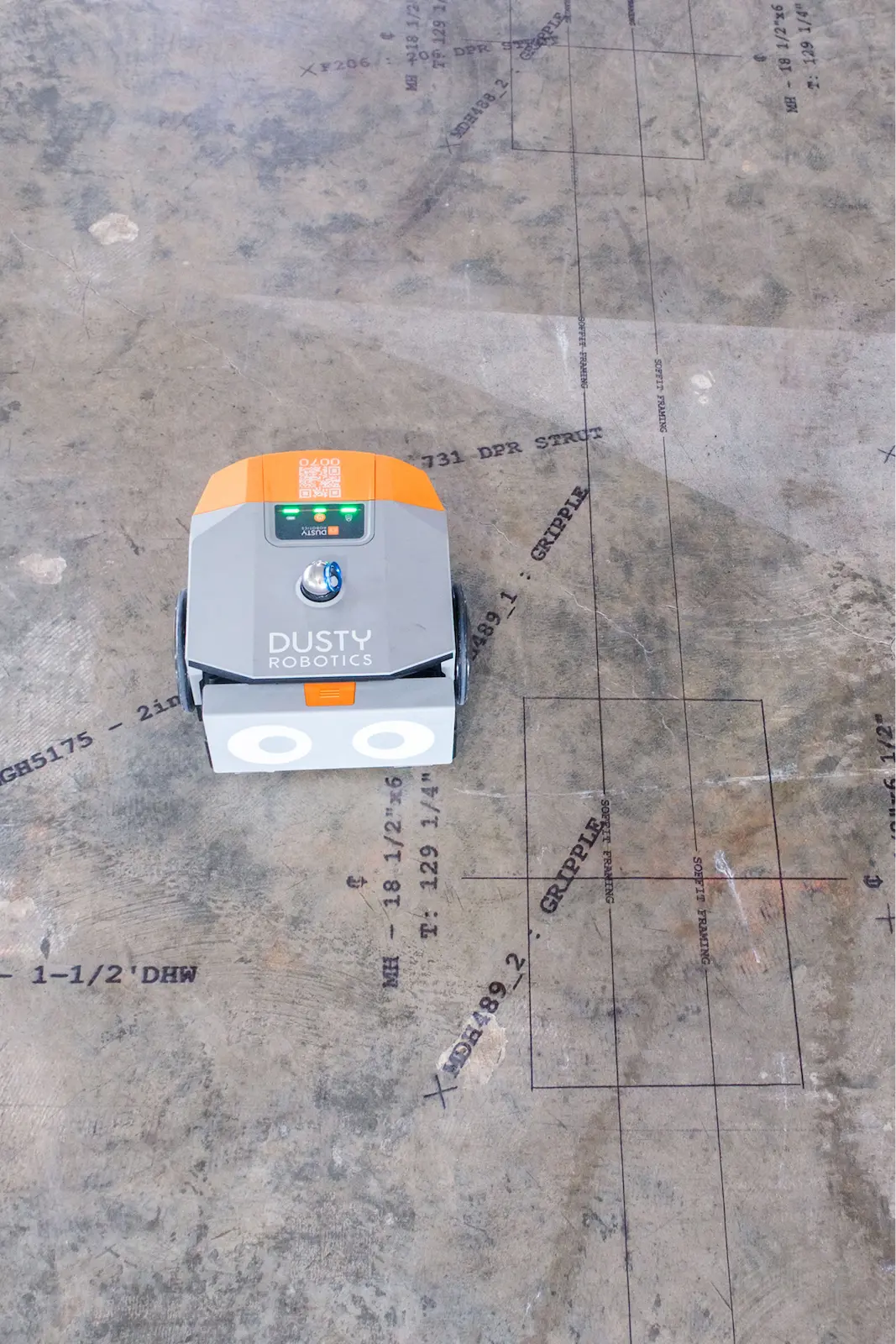
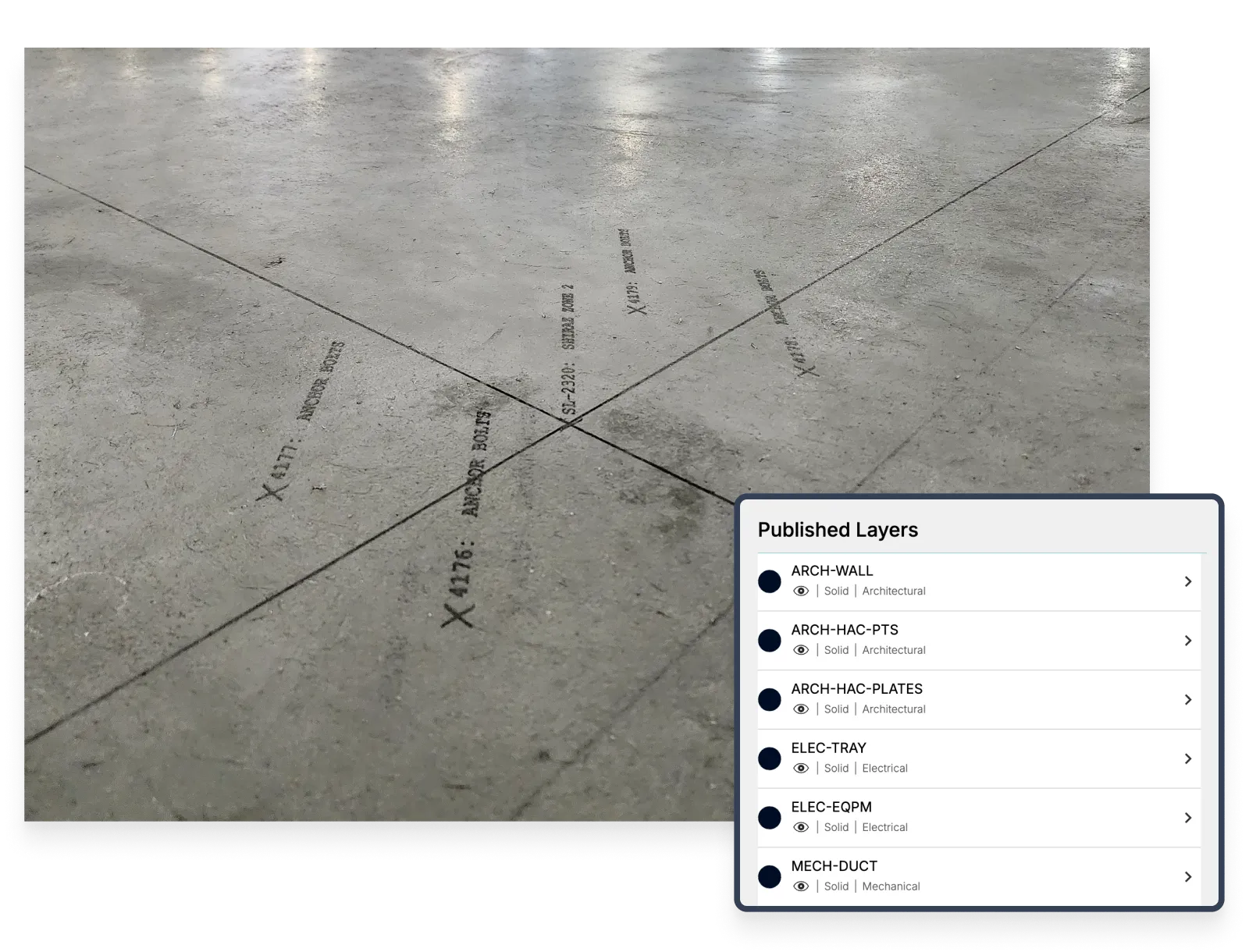
- Prints walls, MEP penetrations, anchor points, callouts, sequencing notes, color-coded trade lines, and QR codes, all at 1/16″ accuracy across the entire slab.
- Works on every floor type in commercial construction: data center, healthcare, life sciences, industrial, multifamily, hospitality, office.
Every line referenced to the model
- File to Field: the coordinated BIM model ingests straight into the robot. No re-drafting between design and the slab.
- Physical AI handles obstacles, edges, and on-slab corrections in real time, so jobsite prep doesn't slow down print day.
- 1/16″ accuracy at 600 DPI. The robot prints what no manual crew can: QR codes, dense annotations, multi-language callouts.
"We have one floor, about 17,700 square feet, and we've laid it out in a couple of days with two robots — normally that would take weeks to get everything laid out. It's a huge difference."

.png)
One operator. Every trade. One pass.
- All trades review and sign off on the layout file before print day, so what gets printed is what everyone agreed to.
- Up to 10x faster than manual floor layout. Whole floors in hours, not days.
- AI-driven obstacle avoidance keeps the robot moving on obstacle-dense floors without a spotter.
See the full
FieldPrint Platform

Frequently asked questions
A total station is an electronic instrument that is used in construction for measuring distances and angles for surveying and construction layout. There are two types of total stations in construction: a total station and a robotic total station. However, total stations are considered outdated tools for construction layout. Fully-automated robotic layout is the better solution that completely automates the layout process by printing the digital model directly on the construction site surface.
What is a floor layout robot?
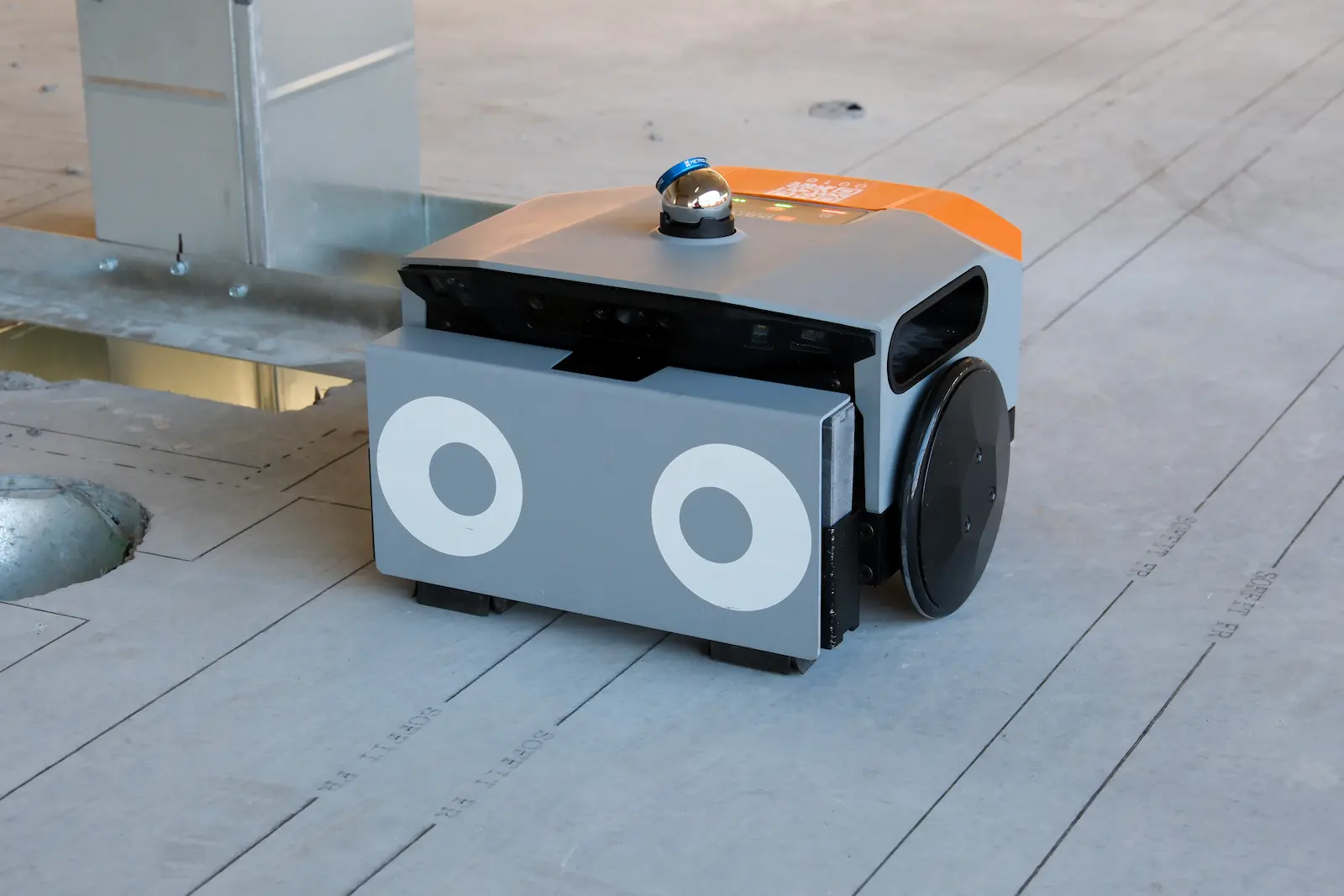
A floor layout robot is an autonomous machine that reads a coordinated BIM or CAD model and prints the building's layout directly onto the concrete floor slab. Instead of a layout crew measuring, marking points, and snapping chalk lines, the robot drives across the slab and prints every wall, MEP penetration, anchor location, door swing, embed, and reference mark at full scale. The category was pioneered by Dusty Robotics, whose FieldPrinter has printed more than 300 million square feet of construction layout across over 1,000 buildings. A floor layout robot replaces three tools at once: the tape measure, the chalk line, and the total station. The result is a slab where every trade builds from the model itself.
How accurate is a robotic floor layout system?
Dusty's FieldPrinter prints floor layout at 1/16-inch (1.6 mm) accuracy at 600 DPI, with every line referenced to the same coordinated BIM model. Accuracy doesn't degrade across a floor or compound between floors — every print is referenced to the same digital source. By comparison, manual layout using tape and chalk line typically holds 1/8 to 1/4 inch under field conditions, with drift compounding across hand-measured runs. Total stations and GPS rovers are point-accurate but still require a human to interpret coordinates and mark each point. A robotic floor layout system is tighter than the tolerance of nearly every downstream trade — framing, MEP rough-in, finish carpentry, anchor placement — which means floor layout is almost never the source of a field-quality problem when the robot prints it.
What does a floor layout robot actually print on the slab?
Whatever is in the coordinated model. Dusty's FieldPrinter prints the full BIM layout file directly on the concrete — wall framing lines, MEP penetrations, anchor and embed locations, door swings, ceiling grid origins, light fixture positions, fire sprinkler heads, in-wall blocking, and structural reference marks. It also prints information a human crew couldn't reproduce in the field: sequencing notes, trade callouts, QR codes that link back to specific model views, multi-language annotations, and color-coded line types for different trades. Most floor layout prints today combine multiple trades in a single pass — framing on top of MEP on top of finishes — so the slab arrives ready for every crew at once. If a layout element exists in the BIM model, the robot can put it on the floor.
How fast can a floor layout robot lay out an entire floor?
Roughly 10x faster than manual layout, on average. A single FieldPrinter prints a typical commercial floor in hours rather than the days a manual crew needs. At Truebeck, a 17,700 square foot life sciences floor was laid out in a couple of days with two robots — work that would have taken weeks by hand. Across more than 1,000 buildings and 300 million square feet of printed layout, Dusty customers consistently see full-building layout compress from weeks down to days. Speed scales with robot count and floor complexity, not trade headcount or layout-crew availability. The operational unlock is that floor layout stops being the bottleneck for downstream framing, MEP rough-in, and finish trades, and becomes the gate that lets the next trade start sooner.
How does Dusty's floor layout robot compare to total stations and GPS rovers?
Total stations and GPS rovers are point-marking tools — a human operator pulls coordinates from the model, then physically marks each point on the slab and snaps chalk lines between them. Both are accurate, and both require a person in the middle translating the model into the field one point at a time. A floor layout robot eliminates that translation step. Dusty's FieldPrinter ingests the coordinated BIM model directly and prints the entire layout file — wall lines, MEP penetrations, embeds, annotations, trade callouts — at full scale in a single autonomous pass. Where a layout crew with a total station typically handles a few hundred points per shift, the robot prints thousands of lines and labels per hour at the same accuracy class. Annotations and QR codes come along for free.
Want to learn more?