The Layout Machine That Prints Your Model on the Slab
A layout machine that prints the model
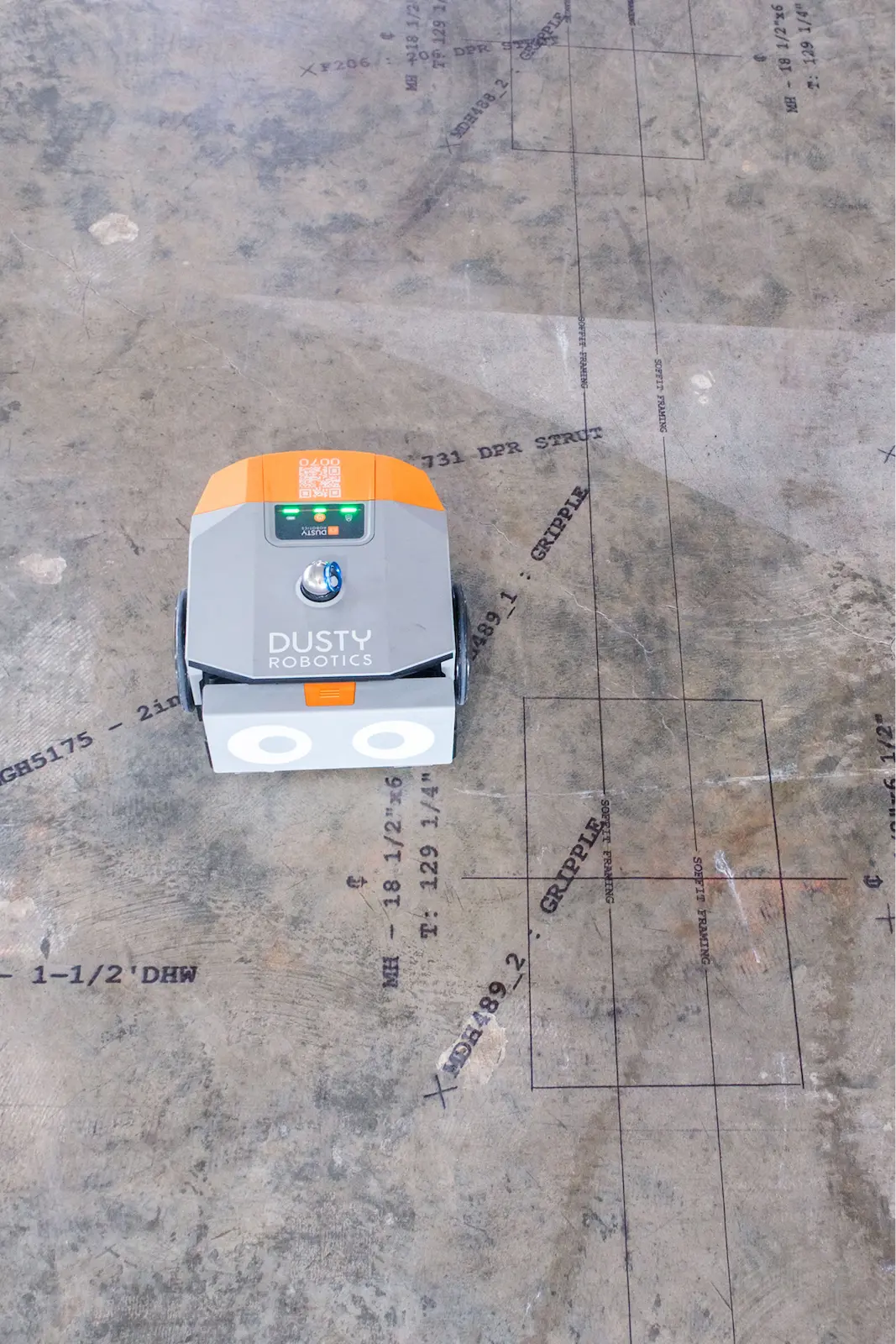
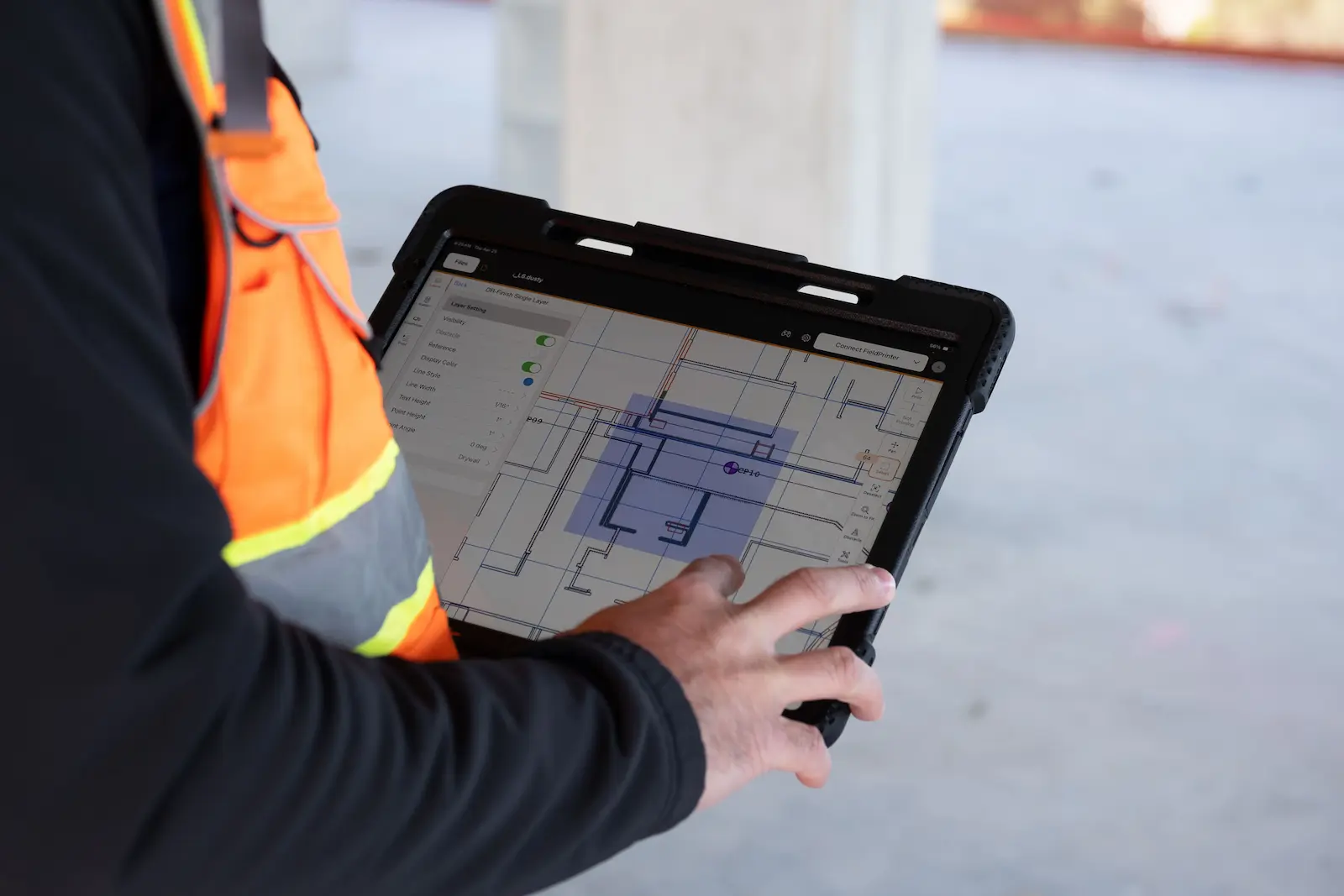
- Reads the coordinated BIM or CAD model and prints the full layout in a single run, no point-by-point translation.
- Prints walls, MEP penetrations, anchor points, callouts, sequencing notes, color-coded trade lines, and QR codes at 1/16″ accuracy across 300M+ printed square feet.
- Works on every floor type in commercial construction: data center, healthcare, life sciences, industrial, multifamily, hospitality, office.
The most accurate layout machine on the slab
- 1/16″ accuracy at 600 DPI, tighter than the tolerances of the framing, MEP, and finish work that builds off layout.
- Whole floors print in hours where a manual crew takes days, with one operator running the machine.
- Prints what a manual crew can't: multi-language callouts, QR codes, dense annotations, and full sequencing notes in a single pass.
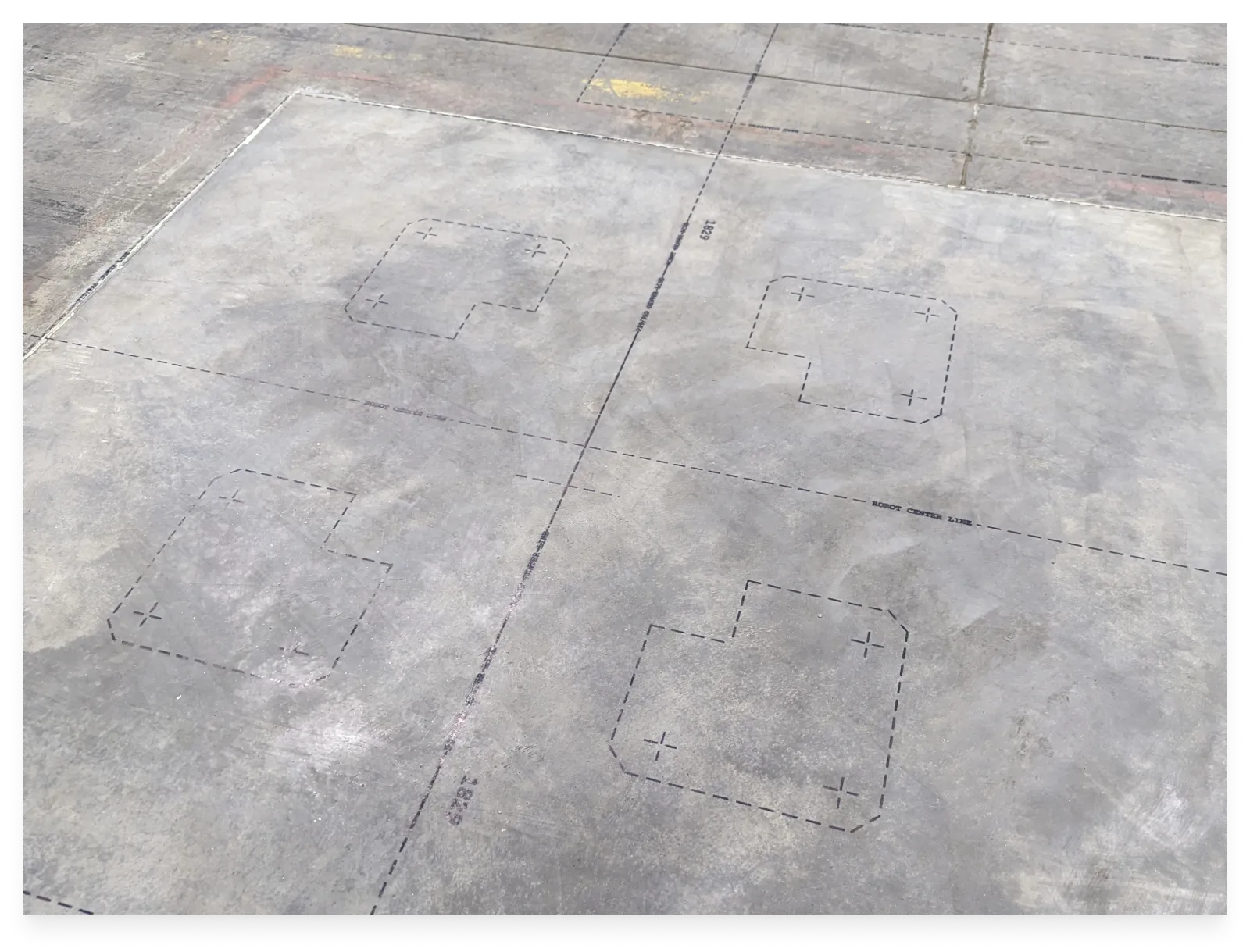
This amazing machine can print floor layouts, walls, MEP elements. It is literally putting your drawings on the concrete.


One operator runs the whole floor
- All trades review and sign off on the layout file before print day, so the slab shows what everyone agreed to.
- One operator runs the floor where a two-to-four-person crew used to mark by hand.
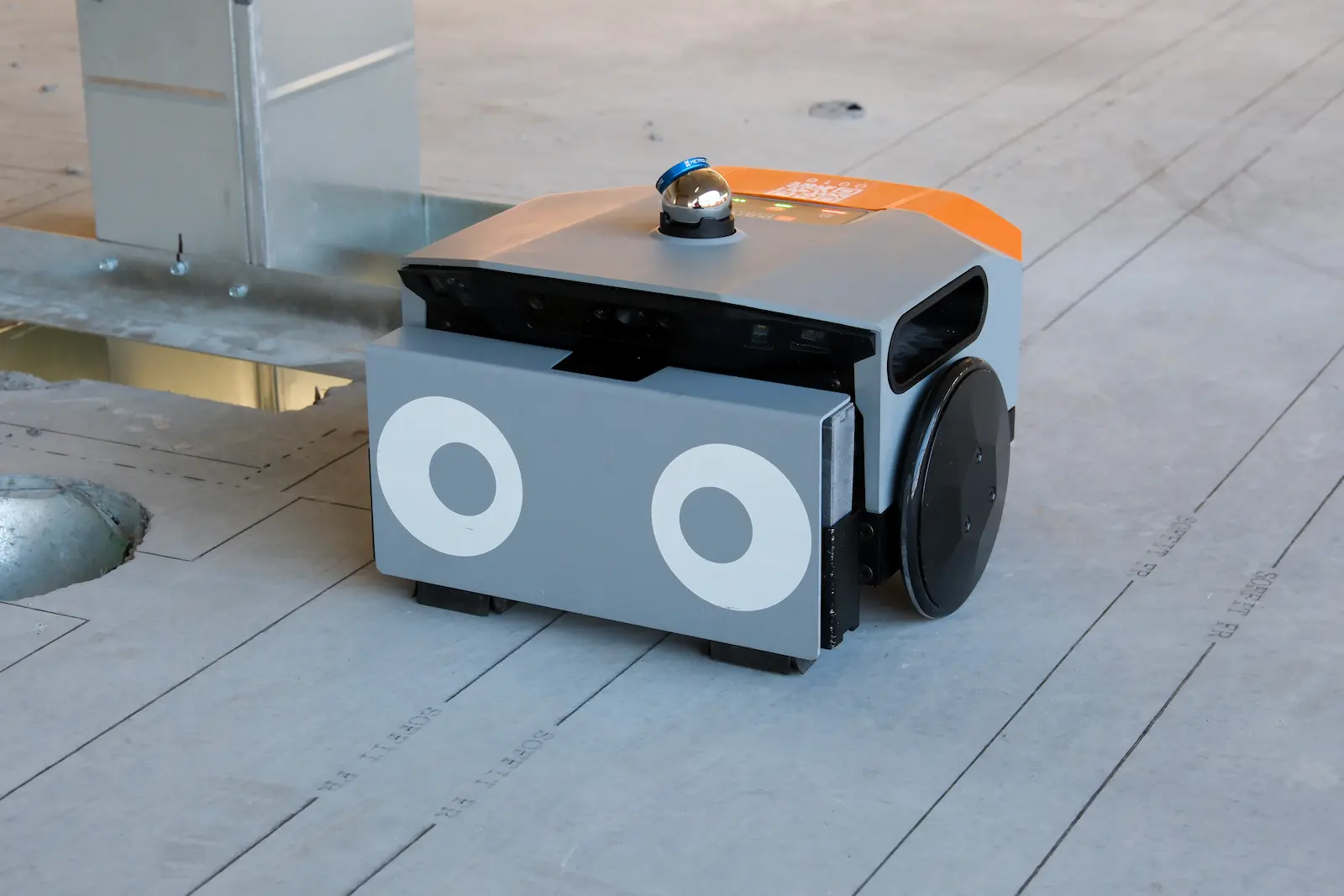
- Obstacle avoidance keeps the machine moving on obstacle-dense floors without a spotter.
See the full
FieldPrint Platform

Frequently asked questions
A total station is an electronic instrument that is used in construction for measuring distances and angles for surveying and construction layout. There are two types of total stations in construction: a total station and a robotic total station. However, total stations are considered outdated tools for construction layout. Fully-automated robotic layout is the better solution that completely automates the layout process by printing the digital model directly on the construction site surface.
What is a layout machine?
A layout machine is construction equipment that handles jobsite layout: marking out where walls, MEP penetrations, embeds, anchor points, and other elements go on the slab before framing, partitioning, or finish work starts. The traditional layout machines on a commercial jobsite are robotic total stations (Hilti PLT300, Trimble RTS, Topcon LN-150, Leica iCON), GPS rovers, and laser layout tools. They share one workflow: the machine takes a measurement from a known control point, hands the operator a target, and the operator marks the slab by hand. Dusty's FieldPrinter is a different kind of layout machine. It prints the full coordinated BIM model directly on the concrete in a single autonomous run, at 1/16″ accuracy across the entire floor, with no manual marking step.
How does a construction layout machine work?
Most jobsite layout machines work as measurement tools. The robotic total station or GPS rover sights from a known control point, calculates the position of each layout target, and signals the operator to mark each location with a paint stick, chalk, or scribed line. Each point gets measured and marked in sequence by hand, one trade at a time. Dusty's FieldPrinter works differently. It reads the full coordinated BIM model, drives across the slab on its own, and prints every line, annotation, and reference point in place at 1/16″ accuracy. The operator loads the file, sets the control points, and walks the slab while the machine runs. There is no measure-mark step in the middle, and no manual marking on the slab.
How accurate is a robotic layout machine?
Robotic total stations and GPS rovers, the layout machines most jobsites already use, typically deliver 1/8″ accuracy at the measured point when sighted carefully. Human-marking variance often pushes the as-built mark wider than the underlying measurement. Dusty's FieldPrinter prints layout directly on the slab at 1/16″ accuracy at 600 DPI, with no manual marking step to introduce drift. Every line ties back to the same coordinated BIM model, so the layout the field sees is the layout the design coordinated. The printed line is consistently inside the tolerances of the framing, MEP, and finish work that builds off it, so on Dusty projects, layout is rarely the source of a downstream field-quality issue.
What's the difference between a layout machine and a total station?
A robotic total station is a measurement tool that earned its place as the standard layout machine on commercial construction over the past two decades. The operator sets the instrument over a known control point, sights each layout target, and a second crew member marks the slab one point at a time. A printing layout machine like Dusty's FieldPrinter handles a different stage of the work. It takes the coordinated BIM model as input and prints every line, annotation, and reference point on the slab in a single autonomous run, with no measure-mark step. Total stations still earn their keep on initial control points, verification spots, and survey-grade work. FieldPrinter handles the full-floor production layout for every trade in a project.
How fast is a layout machine compared to manual layout?
Dusty's FieldPrinter prints layout at roughly 10x the speed of manual chalk-line work, the baseline against which a printing layout machine is measured. A floor that needed two layout crews and two days of marking is ready for trades in a few hours, with one operator running the machine. Speed gains compound when multi-trade layouts print in the same pass. Instead of sequencing trade layouts across a week, the slab arrives ready for every trade at once. Customers like Truebeck have reported 17,700 sq ft floors laid out in a couple of days that would normally take weeks. The schedule effect shows up loudest on multi-floor commercial work where every saved day moves the next trade onto the slab sooner.
Want to learn more?