
The most technical thing my team does is have a conversation
Paul Tice is the CEO of ToPa 3D, a reality capture and construction layout firm in Bend, Oregon, and a Dusty Robotics Layout Services Partner.
I run a small company. Most people in this industry have never heard of us. But we're mighty: we take on contracts worth millions of dollars on some of the largest construction projects in the country.
The way I've made that math work is by getting technology into my people's hands before anybody else has it. I've gotten on planes to meet startups in random parts of the country because I saw something on LinkedIn or read some blog nobody reads. I've bought software that wasn't finished and figured out the rest myself. I used to say my job was to make every one of my employees a weapon: teach them enough about enough different tools that they can get to an answer three ways when the first two don't work.
Automated layout changed the goal
I still believe that. But automated layout changed what the weapon is.
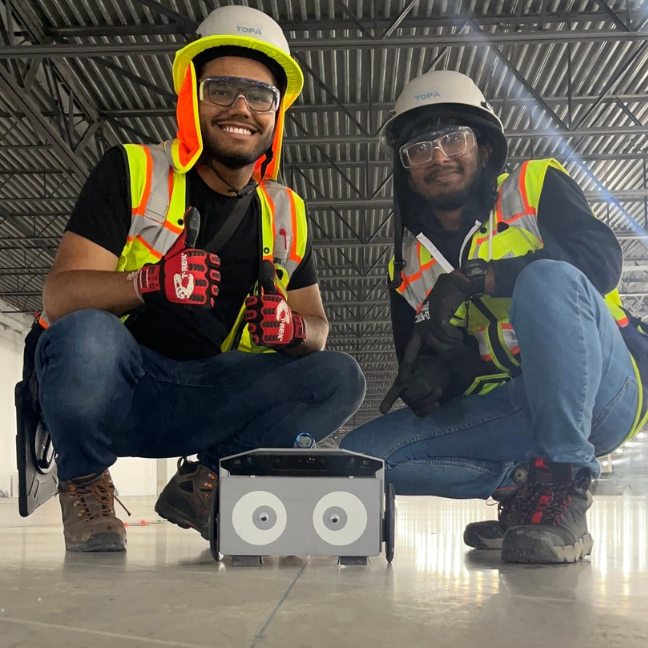
When we started printing layout with Dusty, I knew it'd give a lot of field efficiency. The system did the layout perfectly and surfaced a different problem. When you print a coordinated model at full scale on a slab, you get visibility into any place the model and the building disagree. Somebody still has to figure out why. Somebody has to get the survey team and the BIM team in the same conversation and work out which one is holding the wrong information, and do it without anyone getting defensive and shutting down.
That's a technical skill, but it's also a people skill.
"Somebody has to get the survey team and the BIM team in the same conversation and work out which one is holding the wrong information, and do it without anyone getting defensive and shutting down. That's a technical skill, but it's also a people skill."
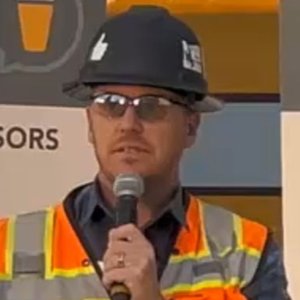
So I changed how I hire
Knowing how to push the buttons and run the tools is just an entry point to get in the door. What I'm actually screening for is whether you can walk into a jobsite trailer with a dozen people in it, explain what you found, say what you think should happen about it, and own that answer. My interview is mostly just a conversation, because that's the job. I'm watching how you respond to me.
That change opened up my hiring in a way I didn't see coming. I've hired a used car salesman. I've hired a plumber. I hired a guy who was stuck in a career that wasn't giving him anything back, and who had been building Linux machines in his spare time for years because he loved it. None of them came out of construction technology. All of them had a seed in them. They liked finding out how things worked, and nobody had ever paid them for it.
Almost everyone who has worked for me has gone on to make six figures. Most of them had never been close to that in their lives. Some got there with us, and some got there after they left, and I'm fine with either one. If my company is a place where somebody's career changes direction, I'm proud of that.
They stopped treating it like a job
Another thing I didn't predict was what it did to how people show up, because they stopped treating it like a job. When you send somebody out to solve a real problem in front of people who need the answer, and you make it clear the problem is theirs to own, they have more ownership of the results. My turnover dropped because the work started mattering to them.
This didn't make things easier; it can still be a grind. We're doing work now that we didn't used to do; we're in rooms we didn't use to be in, with more exposure. The BIM teams we lean on are often understaffed and running on empty, and I try to keep that in front of me when I'm the one showing up on a Thursday asking for updated files by Monday. Nobody hands you cooperation because you're right. We make allies, not enemies. That's the rule, and it's not a soft rule. It's the only reason any of this works.
Your biggest constraint is people
If you're running a specialty firm, or you're a contractor deciding who to put on a job, here's what I'd offer. Try the best technology available with Dusty Robotics. But know that while the tech is good and getting better, your biggest constraint is people who can stand in the gap between the model and the building, between the technology and the team, and get everyone pointed in the same direction.
There are more of those people out there than you think. Most of them aren't working in construction yet.
Hire for that. Then teach them the tools.