
How to Use a Chalk Box for Construction Layout
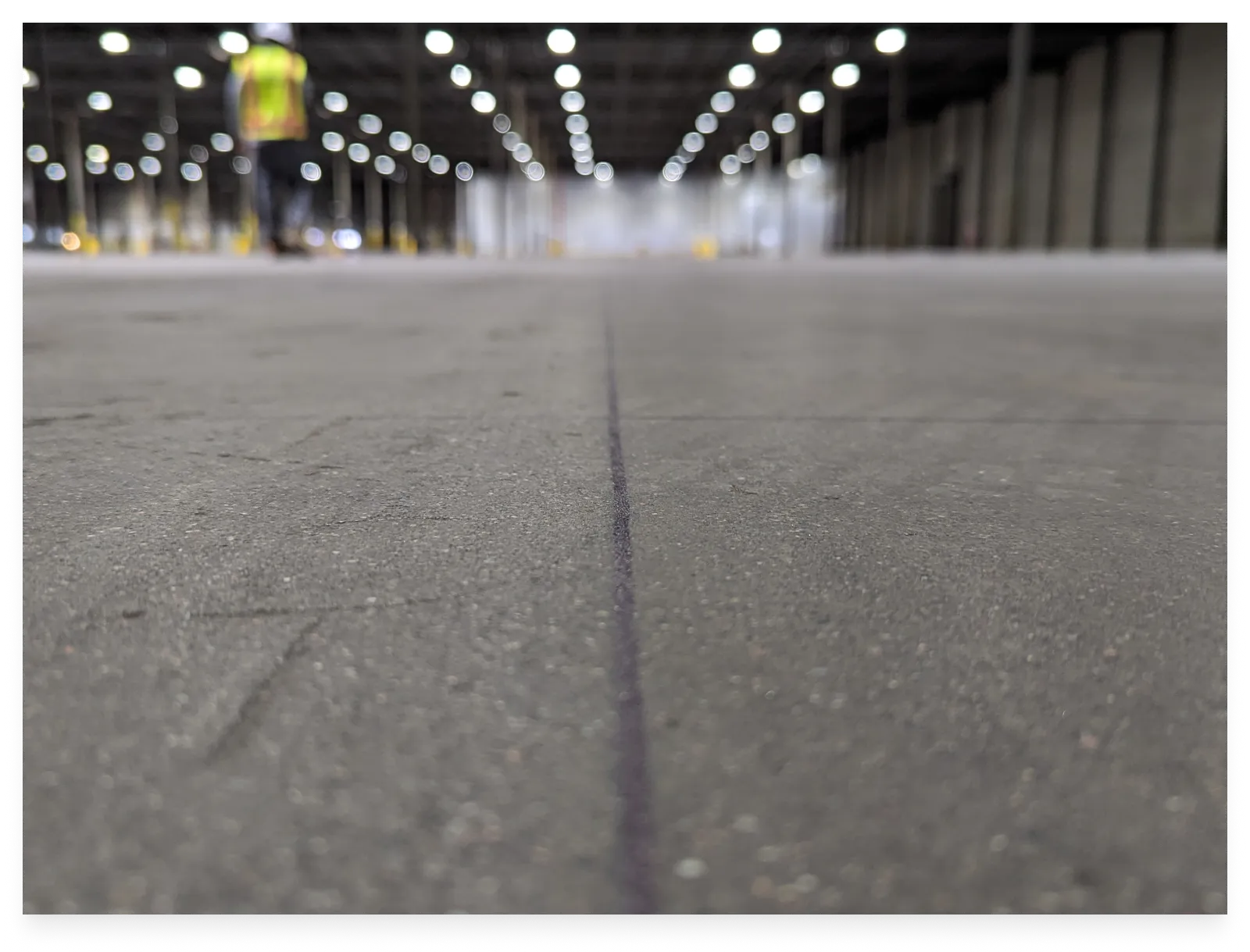
A chalk box (also called a chalk line or chalk reel) marks a straight line by snapping a chalk-coated string against a surface. Pull the line taut between two marked points, then lift it straight up a few inches and release. Chalk color sets how long the line survives; string gauge sets how fine it reads.
What is a chalk box, and how is it different from a chalk reel or a chalk line?
Chalk box, chalk reel, and chalk line all name the same tool, and “chalk line” also names the mark it leaves. Inside the case sits a cotton or polyester line on a geared reel, with an end hook, a fill port sealed by a felt washer, and enough chalk to coat the string as it pays out (Keson). Most boxes double as a plumb bob. It is an ancient tool: chalk lines appear in Book 15 of the Iliad, and East Asian carpenters use an ink line instead, the Japanese sumitsubo (Wikipedia).
How do you snap a chalk line?
Mark both endpoints, anchor one end, pull the line taut, lift it straight up a few inches, and release. Two places it goes wrong: tension and lift angle.
Tension first. If you can lift the string more than 6 inches at the midpoint, it is not tight enough, per This Old House. A slack line records a curve, and the sag pulls the mark toward you. Lift angle second: bring the string straight up, perpendicular to the surface, because an off-angle lift skews the mark or offsets it from the endpoints you measured (This Old House; Family Handyman).
Working alone past roughly 10 feet, pin the midpoint with a finger and snap each half separately. If the mark reads fuzzy, there is too much chalk on the string, so pluck the line in the air once before you snap.
Anchoring the far end:
- A second person pinning it on the mark
- The end hook caught over a slab edge, plate, or form
- A nail or screw head driven at the mark
Snapping a chalk line by hand: the string is pulled taut against the slab, lifted straight up, and released.
What causes a chalk line to come out crooked over long distances?
Past roughly 50 feet the string becomes the dominant error source rather than the tool. Sag pulls the mid-span mark toward the operator, an off-perpendicular lift shifts the whole line, and the braid leaves some uncertainty about where the center of the mark falls.
The fixes are mechanical. Hold the midpoint down and snap each half. On repetitive work, two people link their end hooks, walk the linked pair to opposite ends, and snap until one box runs dry, then swap. Fine Homebuilding published that trick in Issue 3 in 1981 and republished it in 2021; it is still standard practice.
Then the limit that governs everything below. A chalk box reproduces a straight line between two points very well. It does not tell you the two points are in the right place. Layout accuracy is set by the measurement chain that located the endpoints and by the quality of your field control, not by the snap.
Which chalk line color should you use?
Permanence tracks the ratio of pigment to the calcium-carbonate base in the chalk, not the color name. That is the most misreported fact on this subject. The source is Fine Homebuilding’s What’s the Difference: Layout Chalk (Rob Yagid, Issue 186, April 2007), which rates seven colors from very low to very high.
Now the correction, because the current search results have it backwards. Affiliate buyer’s guides assert that yellow is permanent and blue never is. Fine Homebuilding rates yellow moderate to low, and Keson sells a permanent blue (PM8BLUE, PM103BLUE, PM105BLUE) that it describes as waterproof. The reliable variable is the grade printed on the bottle, not the color in the bottle.
Keson ranks its own ProChalk grades 1 to 5: Standard is a 1 and comes in blue and white only, Permanent is a 4 and waterproof in black, blue and red, and Ultimate Dye is a 5 at almost 100% pigment. Tajima splits the same way, with Micro Chalk in the PLC2 series against the water-repellent Snap Line Dye in the PLC3 series.
How thin can a chalk line be?
Line gauge sets how fine the mark reads, and gauge is a spec you buy rather than a technique you learn. The market runs from 0.02 in (0.5 mm) to 0.07 in (1.8 mm), both ends being Tajima’s own published figures.
String structure and material matter as much as gauge, and Keson is explicit about both. A braided line uses less chalk and ghosts less on the surface, while a twisted line is tougher but consumes and deposits more, so refills come around faster. Cotton marks bolder and is vulnerable to moisture; polyester deposits less and holds up wet.
Keson’s own families map onto the same idea, running from Precision (a pencil line for indoor carpentry and tile) through Standard and Bold up to Giant, which reaches 2.00 mm for parking lots and streets and holds up to a pound of chalk.
What should you look for when buying a chalk box?
Five specs decide it: chalk capacity, fill-port design, gear ratio, line structure and case material. That framing is Keson’s own. What follows is a set of criteria rather than a ranked list, because the box that is right for tile is the wrong box for a parking lot.
The counterintuitive spec is gear ratio, where a higher number is not automatically better. Keson’s point is that reeling in too fast does not give the chalk time to coat the line, and fast rewind causes jams and string twist. The ratio trades rewind time against chalk coverage.
Where a manufacturer publishes a ratio, quote theirs. Milwaukee’s 48-22-3986 and Irwin’s STRAIT-LINE MACH6 IWHT48445 both run a 6:1 planetary drive on a 100-foot line, and DeWalt’s DWHT47373L is 3:1. Tajima specifies a gear count rather than a ratio on the CR202B-P and the CR301JF, both five-gear drives, so quote it that way. Every model and figure in this article comes from the manufacturer’s own product page, which is worth saying on a subject where a currently-ranking buyer’s guide recommends a chalk reel that does not exist and several publish a gear ratio their own manufacturer contradicts.
Why does a chalk line come out blurry or run dry?
Six causes account for most bad snaps, and each fix takes seconds.
- A blurry mark. Too much chalk on the string. Pluck it in the air once before snapping.
- Runs dry mid-snap. Either the case is empty or the rewind is too fast to coat the line, which is Keson’s gear-ratio caveat in practice.
- Jams and string twist. Rewinding too fast, again per Keson. Jam-resistant spools exist, including the Tajima CR301JF and the Irwin MACH6.
- String breakage and a degraded line. Over-tension snaps the string; moisture in the case ruins it. Those are the tool’s two named maintenance failures (Wikipedia, citing HowStuffWorks).
- A dirty or wet slab. Chalk does not adhere evenly to dust or standing water, so wipe the strip first. Practitioners on the Fine Homebuilding and ContractorTalk forums report squeegeeing it dry and swapping to a second box while the wet one air-dries, though those are dated field reports rather than manufacturer guidance.
- Wind. A taut line on an open deck still deflects. Anchor both ends and snap shorter runs.
One point the rest of this subject skips: chalk is a per-snap consumable, which is why capacity is a spec.
When does snapping chalk lines stop scaling?
The chalk box is not the bottleneck on a small floor plate. It becomes one when the same slab has to be laid out several times over by several trades.
Three things compound. Each trade re-derives the same geometry from the same drawings, so the measurement chain runs once per trade instead of once per floor. A snapped line also carries geometry and nothing else, with no text, dimension, trade label or revision date, so everything the field needs beyond position gets written in marker or carried in someone’s head. And independent crews snapping in different areas can each be internally correct and still disagree where their work meets.
At that point the question stops being how to snap a better line and becomes whether the layout should be reproduced by hand at all. Our guide to construction layout covers the ground above the tool.
What replaces chalk lines on large commercial projects?
“We reduced virtually all of our exposure to fatigue injury. We’re not getting up and down at all to snap chalk lines. We found this automated layout was about 50% faster with one operator than manual layout with two people—and that included the time that we trained on it.”

Read the full Dale Construction story.
On large commercial projects the replacement is a machine that prints the layout instead of a crew that snaps it. Some people call it a chalk robot; the industry terms are layout robot and automated layout. Dusty Robotics’ FieldPrinter drives the slab and puts the coordinated model on it in ink.
Start with the endpoint problem, which is the row that matters most. The FieldPrinter stations from a minimum of three control points measured at sub-1/32" accuracy using Dusty’s laser tracker, then shows measured against modeled positions before printing, so bad field control surfaces before it propagates across a floor. Multi-trade re-snapping gets a different answer: one pass covers every trade from one coordinated file, and dual-line printing puts two parallel lines within 1 inch of each other in the same pass at the same speed, matching the standard 5/8-inch drywall offset. Where crews normally fall back to hand layout, the robot prints within 0.825 inches in front of and 1.25 inches alongside any wall, obstacle or slab edge.
Dusty has printed 300 million square feet across 500+ jobsite implementations for customers including DPR, JE Dunn, Skanska, McCarthy, Swinerton, Barton Malow and Mortenson. Automated layout compared with manual layout and multi-trade layout get their own articles.
None of that makes the chalk box a bad tool or the people using it unskilled. Commercial framing and drywall crews run the robot themselves, and it takes the repetitive measuring off their plate rather than the judgment.
Key facts
- Chalk box, chalk reel and chalk line name the same tool; “chalk line” also names the mark.
- Line gauges run from 0.02 in (0.5 mm) to 0.07 in (1.8 mm), per Tajima’s published specs.
- Permanence tracks pigment ratio, not color. Keson grades its chalk 1 to 5.
- Manufacturer-published rewind ratios on commercial reels run 3:1 to 6:1; faster rewind trades chalk coverage for time.
- A snapped line is straight. That is not evidence the endpoints are right.
- Dusty’s FieldPrinter prints at 1/16" accuracy and 600 DPI, stationing from 3 control points measured at sub-1/32".
Frequently asked questions: chalk box layout and chalk line accuracy
What is the difference between a chalk box, a chalk reel, and a chalk line?
A chalk box, a chalk reel, and a chalk line all describe the same tool: a case holding a chalk-coated string wound on a geared reel. “Chalk line” also names the mark that tool leaves on the surface, which is why the phrase does double duty on a jobsite. The naming splits by audience rather than by product: Keson and Tajima say chalk box in their catalogs, retailers say chalk reel, and DIY publishers say chalk line. Treat all three as one entity when comparing specs.
Which chalk line color lasts the longest on a concrete slab?
Jet black chalk line color lasts the longest on a concrete slab, with red next, because permanence tracks the ratio of pigment to the calcium-carbonate base rather than the color itself (Fine Homebuilding, Issue 186, April 2007). The grade printed on the bottle matters more than the color, since a permanent or dye grade outlasts a standard grade in any color and a permanent blue exists. Watch the limit on the durable end: black and red on concrete are effectively not removable, so use them only where the line can stay.
How accurate is a snapped chalk line over 100 feet?
A snapped chalk line over 100 feet is as accurate as the tension on the string and the endpoints you measured, not as accurate as the tool itself. String sag becomes the dominant error source past roughly 50 feet, and the fix is to hold the midpoint down and snap each half. This Old House gives a usable check: if you can lift the line more than 6 inches at mid-span, it is not tight enough. The limit matters more than the number, because the snap reproduces a straight line between two marks and locating those marks correctly is a separate problem that accounts for most real layout error.
What should you look for in a chalk box for commercial framing layout?
A chalk box for commercial framing layout wants a 100-foot braided line around 1.0 mm, an aluminum or reinforced case, a wide fill port that seals, and a rewind ratio you can live with. On the ratio, Keson’s caution is that reeling in too fast does not let the chalk coat the line and is what causes jams, so a higher ratio is a tradeoff rather than an upgrade; manufacturer-published examples include Milwaukee’s 48-22-3986 and Irwin’s STRAIT-LINE MACH6 at 6:1 planetary and DeWalt’s DWHT47373L at 3:1. Drop to a 0.5 mm line such as Tajima’s Chalk-Rite II CR202B-P if the same box also has to serve tile or finish work.
Can a layout robot replace snapping chalk lines by hand?
A layout robot replaces the snapped chalk line with a printed one, which answers the marking step rather than the crew. Dusty Robotics’ FieldPrinter prints the coordinated model directly onto the slab at 1/16" accuracy and 600 DPI, including text and line weight that a snapped line cannot carry. The FieldPrinter stations from a minimum of three control points measured at sub-1/32" accuracy and flags measured-versus-modeled discrepancies before printing, addressing the endpoint problem rather than the snapping problem. One caveat is not optional: the layout crew still runs and checks the robot, so automation removes the repetitive measuring rather than the judgment.
Does a chalk line work on a wet slab?
A chalk line does not transfer reliably to a wet slab, because powdered chalk needs a dry, dust-free surface to adhere evenly. Dry the strip you are about to snap with a blower or a squeegee first, or switch to a water-repellent dye grade such as Tajima’s Snap Line Dye in the PLC3 series; Keson lists its ProChalk Permanent as waterproof. Watch the tool as well as the mark: moisture inside the case degrades the line itself, one of only two named maintenance failures for a chalk box, the other being string breakage from over-tension.